The Best Blooms
I used to hate red-hot pokers, or Kniphofia, to give them their Latin name; the tall yellow or red stems covered in small blooms. They were gaudy and exactly the wrong colour for hot summer days.
My attitude softened when I discovered the miniature yellow ones, more a soft gold and not much higher than my ankle. I grow them at the very edge of the garden, where the strap-like foliage left after the flowers have died back doesn’t look messy. You can also buy lime green and white ones.
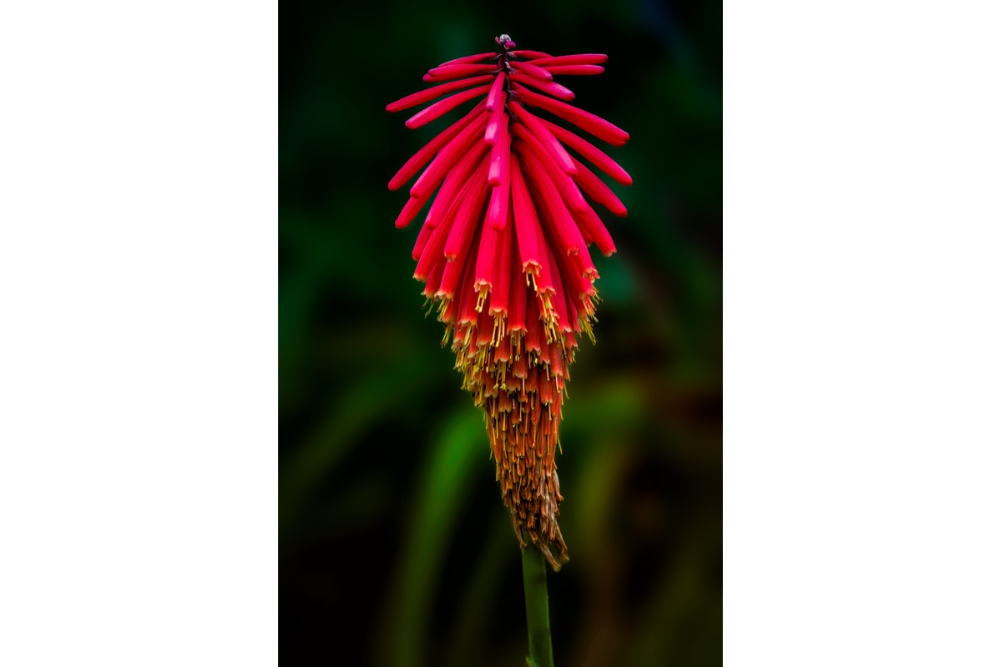
The tiny yellow pokers are pretty, but summer has a host of ‘pretty’ flowers. Winter gardens are harder to fill with colour. The most flagrant are possibly winter-blooming red-hot pokers. Plant lots and your dull chilly days will be filled with the warmth of their colour. It used to be difficult to find winter-blooming red-hot pokers. They are stocked more often now, but you may still need to hunt through specialist bulb and perennial
catalogues to find them.
The winter pokers
‘Winter Cheer’ is perhaps the most common and spectacular. It blooms for about six weeks or even longer, in June to July, about a metre high of bright orange-red. There are several others with slightly different flowering times, so you can have a succession from late autumn through to spring. Kniphofia sarmentosa is as spectacular and even longer blooming, from June to late spring, though its flowers are more a rich coral pink than red. ‘Nancy’s Red’ is a popular variety, but not quite a winter bloomer except in warmer areas, where it will flower from late winter to January.
Kniphofia rooperi can be hard to find, but it is worth it. It’s truly winter blooming even in very cold areas, and with flower heads that are more round than poker shaped.
Our garden also possesses a rare Kniphofia that is tall, spectacular and unashamedly phallic, with a long stem of bright red blooms topped with a large, rounded top. I’ve never seen it for sale except the one time, when I ordered it. Possibly it looks too rude to be popular. Ours is discreetly growing between two boulders. It blooms in late winter to early spring here, but would be a winter bloomer in warmer climates, if you can find
it, and won’t have any family or visitors shocked by its suggestiveness.
The birds love all the Kniphofia, especially the honeyeaters, hovering around them and dipping in their beaks all through winter. I adore them too. Like most winter flowers, Kniphofia bloom longer than their summer relatives, away from the fierce heat.
Growing them
Winter-blooming red-hot pokers prefer full sun, although the summer ones will bloom in light dappled shade too. I plant our winter ones under deciduous trees, so that by the time the flower heads are falling, the leaves have all dropped off , leaving them with all the winter sunlight they want.
Red-hot pokers won’t tolerate heavy frost, but if you plant them in a sheltered spot, next to a sunny wall, or among the deciduous trees or by large rocks, as we do, they should be fine, especially after they’ve been in for a winter or two and acclimatised. Our garden sometimes goes down to minus 9°C, and most of it is only watered by rain, not by me. If winter pokers thrive in our neglected, often drought-struck garden, they will survive almost anywhere in Australia.
Like most flowers though, you’ll get more blooms if they are watered regularly and fed at least once a year. The plants will grow faster too, and the clumps get bigger every year, so you can divide them.
More winter reds
If you want even more vibrant scarlet in mid-winter, look for Aloe arborescens, or the candelabra aloe or torch plant, named for its spikes of tubular scarlet flowers. It is spectacular, and eventually enormous, growing up to two metres high and three metres wide. It will bloom from June well into spring. Candelabra aloe also needs full sun in cold areas, and shelter from heavy frost. In hotter areas it tolerates semi-shade. Once established it is almost indestructible, ignoring drought and heat. You get a magnificent ‘wow’ effect for almost no work.
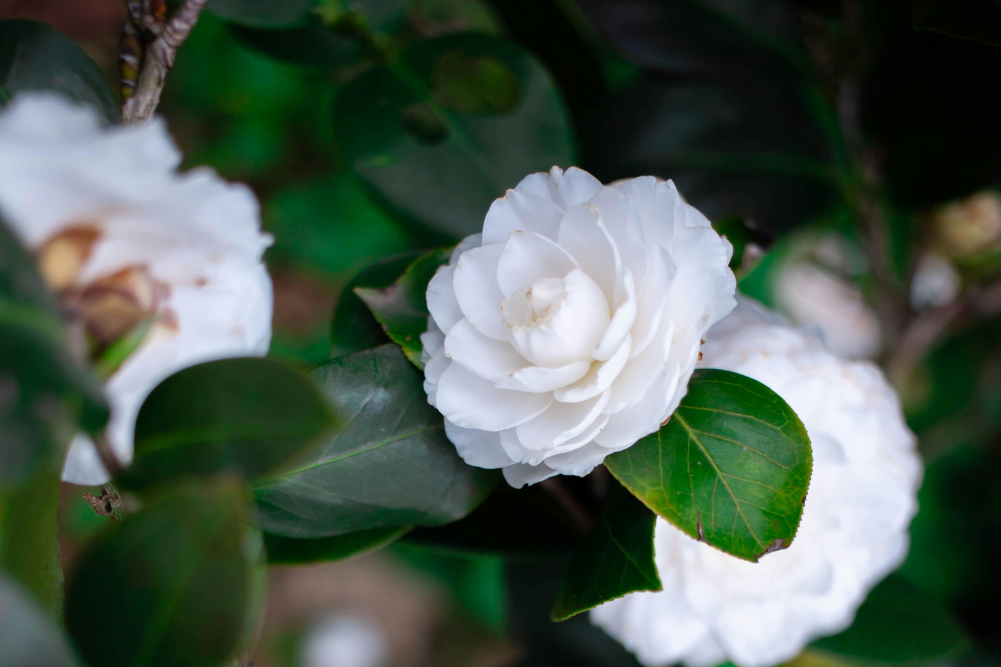
Other glorious winter reds include the many bright-red Camellia japonica varieties; red camellias truly seem to glow in winter. The new pure-red hellebores are a delight, very different from the dull purplish ‘red’ of earlier varieties. I grow ours en masse in a circular garden, as well as along the front steps. After two or three years you can cut off the leaves once the blooms have finished, leaving our steps bare on each side, so we can be sure no snakes are snoozing.
If you love Aussie natives, Grevillea ‘Winter Flame’ has possibly the richest colour of all grevilleas. Prune it back by about a quarter in early summer to make sure you have a bush filled with blooms next winter. Correa ‘Fat Fred’ and its bell-shaped flowers will give you winter blooms too, and the striking blooms of ‘Winter Cheer’ flowering quince are spectacular. The bushes are hardy and totally trouble-free — unless you have black-tailed wallabies, who love eating the flowers as much as we adore looking at them.
This article is featured in WellBeing Magazine 224