Why King Island is the Perfect Place for Producing Manuka Honey
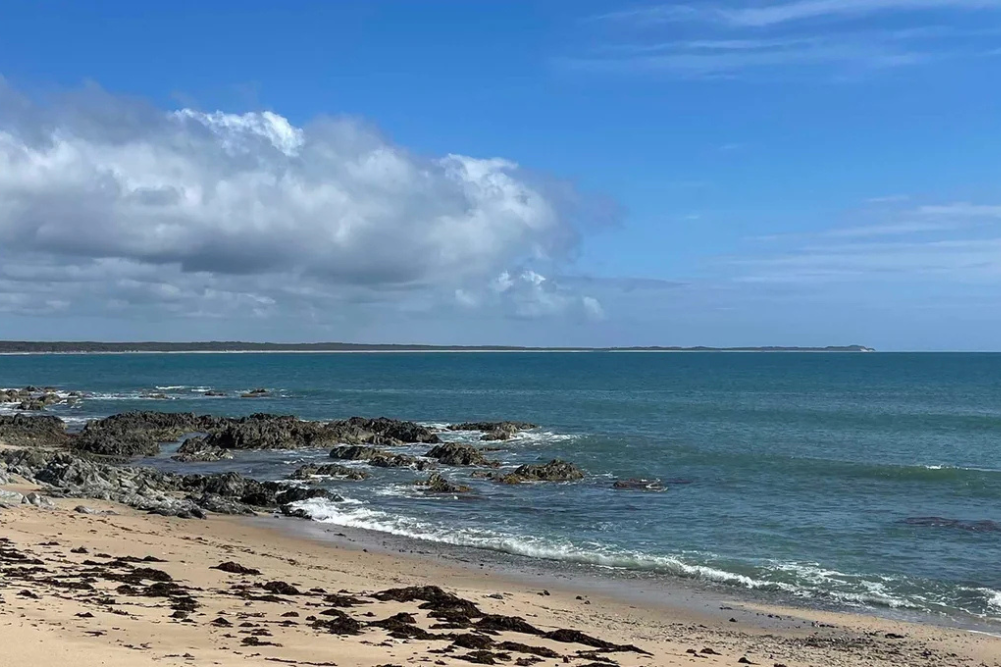
Not all Manuka honey is created equal. While the nectar of the Leptospermum tree provides the foundation for every genuine Manuka honey, the environment in which that tree grows ultimately determines the purity, quality and integrity of the final product. In this respect, few places in the world can match the extraordinary natural advantages of King Island, Tasmania. Its geographical isolation, pristine environment, ancient Manuka forests and unique biosecurity status combine to create one of the world’s finest environments for producing premium Manuka honey.
King Island sits in the middle of Bass Strait, approximately halfway between mainland Australia and Tasmania. Surrounded by ocean, the
island has remained naturally protected from many of the pests and diseases that threaten honey bee populations around the world. Unlike most commercial beekeeping regions, King Island remains free from Varroa mite, Small Hive Beetle, American Foulbrood and European Foulbrood. Because these destructive pests are absent, there is no requirement for routine chemical treatments or antibiotics that many
beekeepers elsewhere rely upon to keep their colonies alive. This allows King Island Pure Manuka honey to be produced without exposing our bees or hive products to many of the chemicals commonly used throughout the global apiculture industry.
For consumers, this translates into confidence. Purchasing King Island Pure Manuka honey produced in an environment where chemical treatments are unnecessary significantly reduces concerns regarding chemical residues and reinforces the natural purity of the final product. King Island’s unique disease-free status provides an advantage that very few commercial honey-producing regions anywhere in the world can genuinely claim.
The island’s remarkable environment extends well beyond bee health. King Island lies immediately northwest of Cape Grim, home to one of only three premier global atmospheric monitoring stations. For decades, scientists from the Bureau of Meteorology and CSIRO havemeasured some of the cleanest air on Earth at this location. Clean air produces exceptionally pure rainfall, and this uncontaminated rain nourishes the island’s soils, native vegetation and extensive Manuka forests. Healthy soils and pristine water create healthier flowering plants, which in turn produce high-quality nectar and pollen for honey bees.

King Island also possesses an extraordinary botanical advantage. The island contains ancient wild stands of Leptospermum scoparium, with evidence suggesting Manuka has existed on the island for tens of thousands of years. These extensive native forests provide an abundant and reliable nectar source each flowering season. Equally important is the island’s relatively limited floral diversity. Approximately seventy percent of King Island is devoted to grazing land, which offers little value to nectar-foraging bees. During the Manuka flowering period, few competing floral species bloom simultaneously. This greatly increases the likelihood that bees collect nectar predominantly from Manuka flowers,
enabling the production of exceptionally pure monofloral Manuka honey.
The chemistry of Manuka honey further highlights why this environment matters. Unlike ordinary honey, whose antibacterial activity relies
primarily on hydrogen peroxide generated through natural bee enzymes, genuine Manuka honey contains naturally occurring
dihydroxyacetone (DHA) in the nectar, which gradually converts into methylglyoxal (MGO) as the honey matures. MGO is the compound
responsible for Manuka honey’s unique and stable non-peroxide antibacterial activity, making it one of the world’s most scientifically
recognised functional foods.
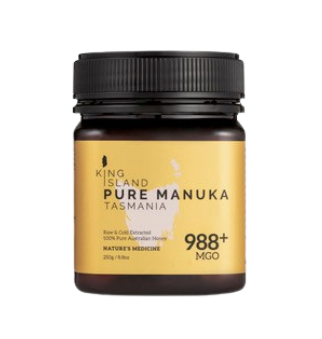
Consumers today are increasingly seeking authenticity and traceability. Unfortunately, Manuka honey has become one of the world’s most frequently adulterated premium food products. In this environment, transparency is essential. King Island Pure Manuka independently
verifies MGO levels, demonstrates complete traceability from hive to jar, and provide consumers with confidence that they are purchasing
authentic Australian Manuka honey. Independent certification and laboratory testing from the University of Sunshine Coast reinforce this trust and distinguish genuine premium products from counterfeit alternatives.
Ultimately, great Manuka honey begins long before bees visit a flower. It begins with an untouched ecosystem where healthy forests, clean air, pure rainfall and disease-free bees work together exactly as nature intended. King Island offers this rare combination of environmental purity, natural biosecurity and exceptional botanical resources. These advantages not only protect the integrity of the honey but also allow King Island Pure Manuka to create authentic premium Manuka honey with complete transparency and confidence.
For consumers seeking the highest standards of purity, provenance and trust, King Island is not simply another place where Manuka honey is produced—it is one of the finest natural environments on Earth for producing it.
Follow on Instagram @kingislandpuremanuka and Facebook @KingIslandPureManuka
Visit King Island Pure, to purchase all Manuka products