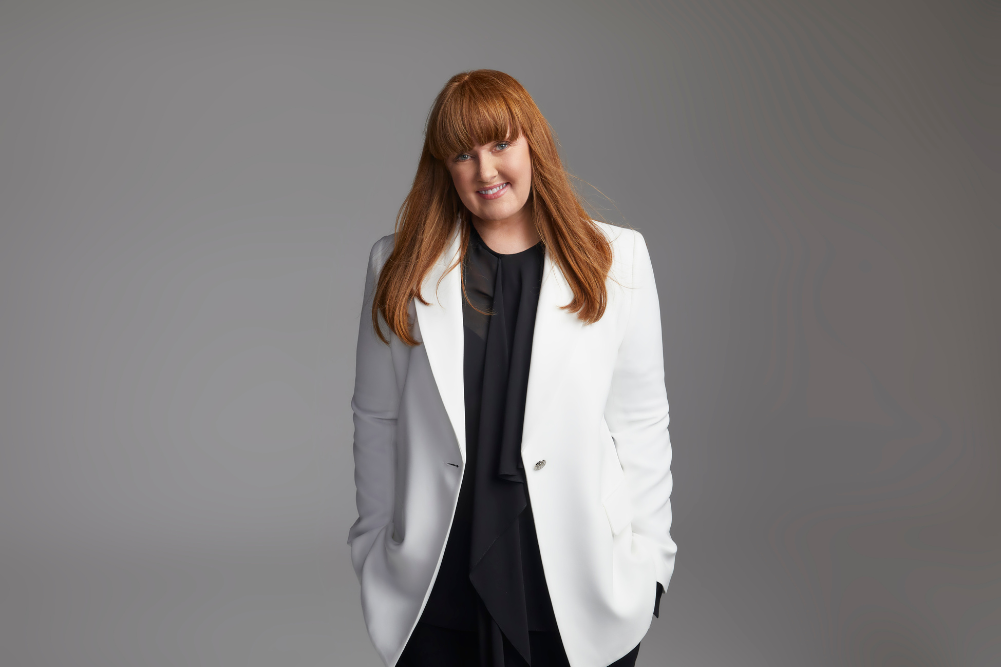
Megan Dalla-Camina
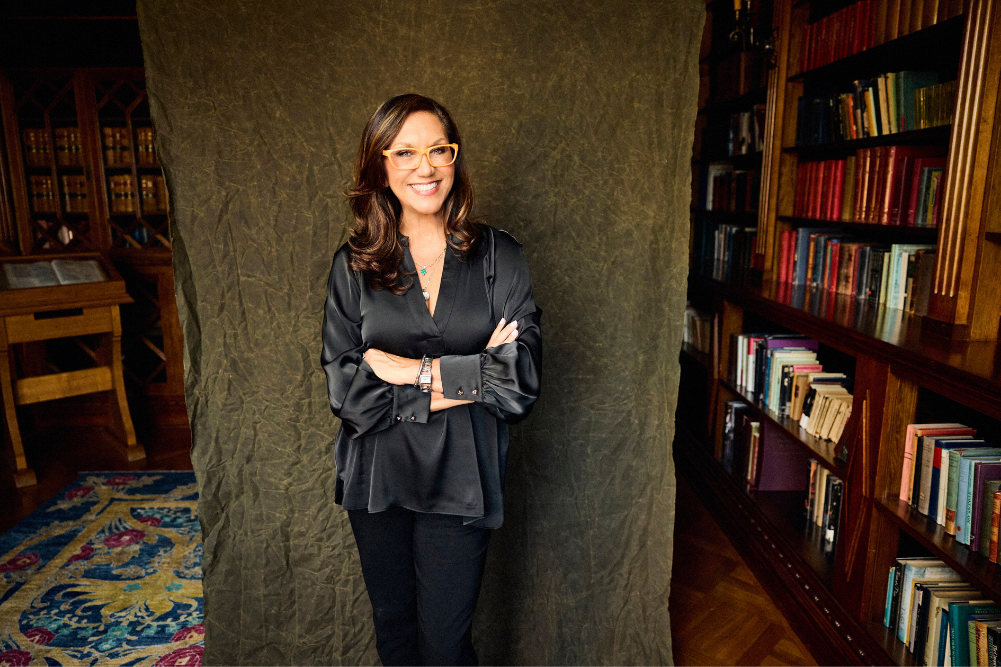
Megan Dalla-Camina’s heart pummelled as she raised her hand among a sea of around 300 dinner guests. At 34 years old and as a successful marketing executive, Dalla-Camina was an attendee at a women’s leadership conference, where a male presenter, from what she describes as “one of the big business magazines”, was presenting the latest “Power 100 list”. But something was wrong. Something was missing.
“Have you ever had one of those moments when you can feel yourself standing up and you’re like, ‘No, no, sit down!’” recalls Dalla-Camina, smiling. “I stood up and said, ‘What’s the definition of power used to compile this list?’ And he’s fumbling and stumbling to come up with an answer. Then I said, ‘And where are the women?’”
It was — and arguably still is — a fair question. In 2024, of Australia’s top 200 ASX-listed companies, only 19 were led by female CEOs, that’s less than 10 per cent. Of those, 11 were only appointed to their roles in the four years prior. Back in the early 2010s, when Dalla-Camina posed her original question, the rate was three per cent.
That question would alter the trajectory of her life. “I didn’t know it at the time, but that would become such a ‘change your life’ moment,” recalls Dalla-Camina, who suddenly realised there was a huge problem with women having the access and means to fulfi l leadership roles in business.
After almost two decades in the corporate world — navigating challenges such as gender stereotyping, micro-aggressions and imposter syndrome — Dalla-Camina knew something needed to change. She wanted to help women not just succeed but thrive in leadership. Today, at 55 years old, Dalla-Camina is the founder of Women Rising, a coaching platform that has empowered more than 10,000 women in 68 countries to lead with confidence and flourish at work.
“My mission has always been around helping women rise and giving them the tools that I never had to better manage their life, their career and their leadership journey in a holistic way,” says Dalla-Camina.
She is also the author of four books on women’s wisdom and transformation, a PhD researcher on women’s spirituality and an expert in women’s leadership. Dalla-Camina was also recognised as B&T’s Woman of the Year and Mentor of the Year in 2023 and was the winner of the Telstra Best of Business Award 2024 for Accelerating Women.
Hollywood dreams
Dalla-Camina’s early life was driven by creativity and a desire to challenge conventions. Born in Adelaide, she moved to Sydney as a toddler and from a young age fell in love with performing, writing and books. “As soon as I could hold a pencil, I would write poetry, I would sing … I was very active in my local theatre company, in my dance academy and that’s what I thought I would be doing for my entire life,” says Dalla-Camina. “I thought I would be an actress, that I would move to LA to do the whole Hollywood thing.”
Although she was a bookworm, something changed for Dalla-Camina in her teens. She started to do something that would defi ne her later career choices — ask questions and challenge the status quo. “My mum always said I was an angel until I hit 15, and then just went completely off track,” says Dalla-Camina. “I think that rebellious actress came out in me from 15 onward, and through my early 20s as well.” She started skipping school and couldn’t understand why traditional study was important if she wanted to be on the stage and screen.
“I started to challenge why things were the way they were,” says Dalla-Camina. “I just wanted to live that creative artist life, rather than following the ‘norms’ and the way that things ‘had’ to be done, particularly around school … I just wanted to be a creative, a musician, an actress and do things that I thought were far more interesting than schoolwork.”
But in her early 20s, while she was waitressing around her studies at drama school, health issues followed by an accident would knock Dalla-Camina from the path she was on.
Corporate burnout
In her early 20s, Dalla-Camina developed chronic fatigue syndrome. Soon after, she also injured her back in a car accident and needed treatment for almost a year. At a crossroads and seeking career stability, she put her acting dreams aside and joined the corporate world, soon serving as marketing director at global businesses including GE, IBM and PwC.
Shortly after joining the corporate world, Dalla-Camina became a single parent and was juggling work and parenthood, while also studying for a master’s degree in business. Eventually, she experienced burnout and the return of her fatigue symptoms.
“Back then, we weren’t talking so much about how hard it was to be a working mother, how hard it was to follow your purpose and do work that you were really passionate about,” says Dalla-Camina. “We weren’t having open conversations about wellbeing and burnout and how debilitating it was. None of that was happening when I was going through my burnout. It was very much ‘put on your mask, smile, tell everybody that you’re fine’, or you’re going to risk losing your job and reputation.”
Dalla-Camina isn’t alone in experiencing burnout, it’s a problem for many working women. A 2024 survey of 1000 UK employees, commissioned by Employment Hero, revealed that nearly two-thirds of women reported experiencing burnout in the workplace, compared to just over half of men.
“That was really a massive wake-up moment for me, says Dalla-Camina. “I thought, ‘Is this how I want to live the rest of my life, in this corporate grind of never really feeling fully well, always battling some kind of underlying stress-related or health-related illness?’”
Leaving behind a director title and higher pay cheque, Dalla-Camina stepped back into a four-day-per-week role as head of strategy for a division at IBM. She completed her second master’s degree, this time in wellness and positive psychology, and wrote a book on women’s development, solidifying her goal to eventually start her own business to help empower women to fi nd their purpose.
While at IBM, Dalla-Camina embraced opportunities to challenge gender-based conventions in the workplace. Just one of these projects was the Champions of Change Coalition. Started in 2010 by Elizabeth Broderick AO, the Sex Discrimination Commissioner at the time, this was a globally recognised initiative of CEO-level leaders committed to achieving inclusive gender equality across the workplace.
“I became the first implementation leader in that initiative, which has become one of the most renowned global initiatives for gender equality since 2010,” says Dalla-Camina. “I was involved in the first three years where we were gathering the top CEOs in the country to look at ‘How do we get to gender equality?’ ‘How do we get more women into leadership roles?’ And really engaging the men in power in that initiative. Because prior to that it had been very much women talking to women about women, diversity councils full of women and women’s conferences full of women, but the men at the top of organisations weren’t driving it.”
Women rising
After three years of planning, Dalla-Camina left her secure corporate role and started her own business of career coaching for women and speaking at conferences about women’s leadership, confi dence and career planning. This led to her founding and launching the Women Rising program in 2021.
In just four years, Women Rising has supported thousands of women at more than 770 companies and partnered with many of the world’s leading organisations including Microsoft, ANZ, Telstra, EY and PwC. The four-month program provides online group coaching and interactive training modules on topics such as overcoming imposter syndrome in the workplace, how to gain greater clarity on career goals and aspirations, and building women’s confidence to help them realise their worth and ask for what they deserve, whether that’s flexible hours around childcare or a pay rise. Seeing how many women flourish after taking the program is deeply rewarding for Dalla-Camina.
One story that sticks with her is of a woman named Michelle, a mother in her early 40s, employed at Microsoft. Working with Dalla-Camina helped Michelle get a clearer perspective of the vision she wanted for her life.
“She was just in survival mode,” recalls Dalla-Camina. “She’d been an individual contributor at work and she always wanted to be a manager, but she didn’t have the confidence. She didn’t have the visibility. She didn’t think she could do it. She had a very loud inner critic telling her all the reasons why she would never be able to move up. Within about three months of joining Women Rising, she did a lot of work on the vision that she wanted for her life and got really clear on what she wanted for her career. She went from an individual contributor to a manager in six months. She’s such a great example of what happens when you do this work and use the tools to create what you really want for yourself.”
Just like Dalla-Camina’s life-change was prompted by one question, yours could be, too. “The question isn’t, ‘How do I be more successful at work?’ The first question [to ask yourself] is, ‘What is it that I want for my life?’” says Dalla-Camina. “‘What is my vision for what I want for myself? And if I was quiet enough for long enough to ask that question, and then listen to my own inner wisdom for the answer, what would it say’?”
Male allyship
But the journey towards equality isn’t just about changing women’s mindsets. According to Dalla-Camina, educating men plays a huge role, too. That’s why she has incorporated a male allies program into her business, and to date has coached more than 1000 men on how to be better allies.
“I think a lot of men have felt that it’s very combative to talk about equality,” says Dalla-Camina. “Really what we’re doing is inviting them in, to say, ‘We want you to be part of this’, and they want to be part of the creation of a more equal society. A lot of men — research would say about 78 per cent of men — say they don’t have the tools. They don’t know what to do. They don’t want to do the wrong thing. So that’s what we’re trying to alleviate.”
Research also suggests that men and women have differing views on whether men in the workforce are being good allies, suggesting that the need for education on this is high. A survey of more than 1100 workers in mid to large companies was carried out by the Integrating Women Leaders (IWL) Foundation, with the results published in 2022. Among the executive level of leadership, 77 per cent of men believe that most men within their organisation were either “active” or “advocates” for gender equity, compared to less than half (45 per cent) of women.
There are small everyday behavioural changes men can make to be better allies, but the first step, according to Dalla-Camina, is to self-reflect on whether you are truly an active ally to women. “Most men come into our program thinking that they’re male allies. What they very quickly realise, probably 95 per cent of them, is that they’re ‘good guys’, but they’re not actively advocating for women. For example, at work, when a woman gets spoken over in a meeting, the male ally in the room is the one who says, ‘Excuse me, everyone, Jane wasn’t finished speaking, I’d like to hear her finish…’ Because 74 per cent of women report being talked over constantly in meetings at work by men.
“In public life, the male ally, when he’s out, walking behind a woman through the park, is the one who will switch to the other lane so that the woman doesn’t constantly feel like she’s threatened because there’s a man walking behind her in the dark. It’s one of the active things that men can do to demonstrate true allyship and support of women in our community, at home or at work.”
The heart of wellbeing
Over the next few years, alongside growing Women Rising to continue helping women transform their careers, Dalla-Camina is continuing her PhD in women’s spirituality and leadership at the California Institute of Integral Studies.
When she’s not working or researching, Dalla-Camina spends her downtime with her son, or meditating, reading and embracing spirituality. “I have a very deep personal spiritual practice,” says Dalla-Camina. “Meditation, yoga, Kriya, mantra, japa [meditative mantra repetition], very much in the Vedanta teachings and Himalayan yoga. I go on a pilgrimage to India once or twice a year into the Himalayas … India is very near and dear to my heart.”
While Dalla-Camina coaches women on leadership and empowerment, she feels that at the heart of everything she teaches is health and wellbeing. “Wellbeing for me means thriving, flourishing,” she says. “It means that my body is healthy, my mind is healthy, my spirit is healthy, my emotional state is healthy and that I am grounded and functioning at a level of flourishing. It means that I have balance and homeostasis across these aspects of my life … financial wellbeing, community wellbeing, all of those aspects are in harmony.
“When you have wellbeing, you have 1000 problems in your life,” says Dalla-Camina. “When you don’t have wellbeing, you have one problem — how do I get wellbeing?”