Backyard Self-Sufficiency Basics
Back in my novice gardening years I was lucky enough to have an elderly neighbour who was the most brilliant gardener I have ever known. Jean grew almost everything she needed on a patch of ground no larger than a normal backyard.
Her orchard’s apricot tree, apple trees, plum trees, lemon tree, orange and mandarin trees gave her year round fruit, with a passionfruit vine, raspberries and strawberries too. The manure from her hens fed the fruit, vegetables and the flowers that cascaded down the hill in front of the house. They gave eggs too, though she preferred to use the ducks’ eggs for her unsurpassed sponge cakes. Every morning she ‘tickled’ the soil, removing weeds, adding a bit more tucker.
Jean was my inspiration. If she could do it, in her seventies, I could too, and so can you. The basics for a year of mostly home-grown tucker are simple.
Potatoes: grow them in vertical potato bags if you don’t have enough garden space. Plant in spring and in late summer so you get two crops a year.
Silverbeet: drought, heat and cold hardy and prolifi c.
Sweet corn: plant in spring, and every two weeks till 12 weeks before your expected fi rst frost. Try growing maize to feed hens: you get more crop in a small space.
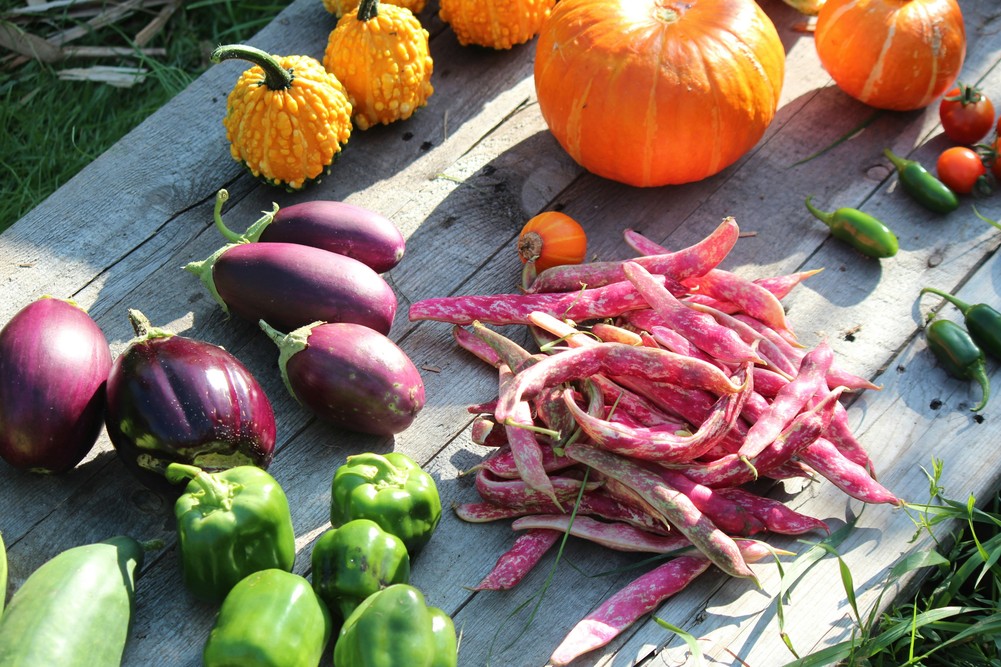
Beans, peas and snow peas: grow them up a trellis so they take up less space. Grow enough beans to save the seed to dry for winter stews and soups: excellent protein.
Lettuce: try “all year” lettuce, like the frilly red ones or Red Cos where you can pick the leaves as you want them, but feed well: underfed lettuce turns bitter.
Parsley: plant in spring for 12 months’ eating. It is impossible to have too much parsley, a reliable green that can be chopped into almost every savoury dish. Perennial spring onions: feed well, and they will feed you instead of “bulb” onions.
Garlic chives: another hardy, year-round green.
Warrigal spinach: this native grows like a weed, fast and hardy. It’s high in oxalic acid (as is English spinach). Blanch it in one lot of boiling water for three minutes before cooking in another lot of water. Discard the water it was cooked in. But it will give you lots for soup, quiches, frittatas, savoury pancakes or muffins and much else.
Tomatoes: grow many kinds. Throw the surplus into the freezer to deal with when you have time in winter, removing the skins and making soup or adding to stews.
Herbs: these are the secret to gourmet tucker from humble ingredients. Thyme, sage, peppermint and rosemary are the essentials.
A lemon tree: try Eureka, the most heat and cold hardy lemon. While it mostly crops in winter, picking fruit one by one over a long period stimulates it to flower and fruit throughout the year.
Rhubarb: Wandin Winter rhubarb will give you a crop all year round if well fed.
Oranges: one navel orange and a Valencia orange will give you at least six months of oranges.
Apples: grow early, medium and late varieties of dwarf apple, preferably as a hedge to save space, and you will have 12 months of apple crunch. Our apple year begins with Irish Peach and Early Blaze in December and finishes with Sturmer Pippin in August, as long as I remember to net some fruit so the fruit bats don’t guzzle it all. In subtropical areas stick to tropical varieties. In the true tropics, grow mangoes instead.
Avocados: these can be grown in cold climates as long as you protect them for fi ve years to establish and can shelter them from hot and cold winds. We go down to minus 9°C in winter, but avocados are one of my staple foods. They can be dwarfed in a large pot, half-barrel size, and even brought inside in the coldest months. Hass may be best for this. It also fruits best without another variety that blooms at the same time as a pollinator.
Nut trees: try dwarf self-pollinating almonds, though if you have room go wild with walnuts, pecans, macadamias and pistachios.
Think you lack space?
Plant every fence with climbers: choko, passionfruit, cold-tolerant banana passionfruit, kiwifruit, grapes, perennial beans, cucumbers, rockmelons, small watermelons. Trellis these too.
Espalier dwarf fruit trees against every wall of your house to make use of the stored and reflected warmth. Water well, as they may get dry under the eaves, and avoid planting near underground pipes.
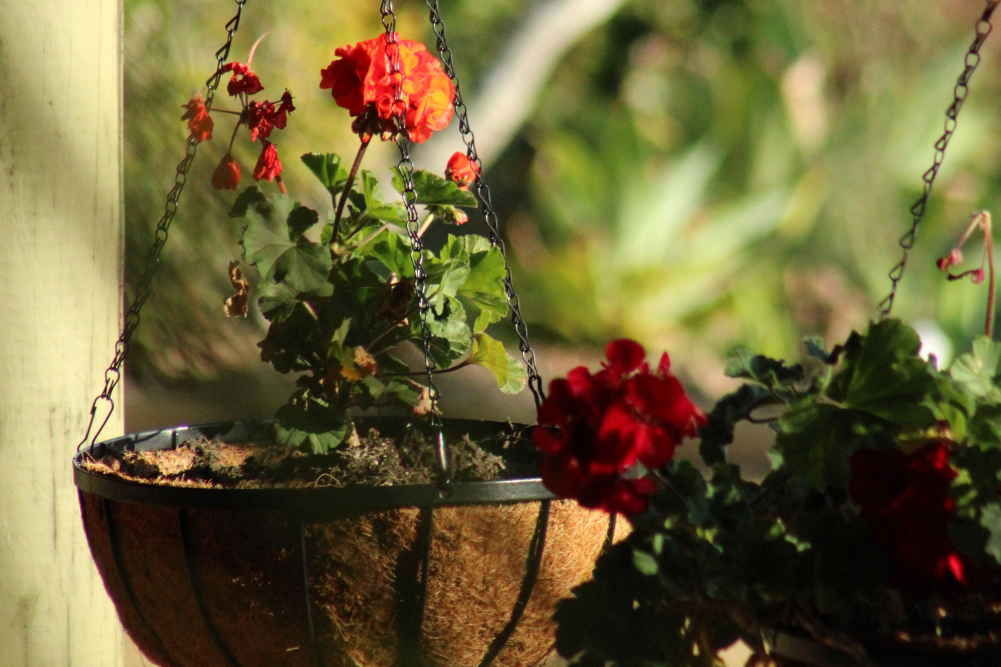
Place hanging baskets under the eaves, all at diff erent heights, so you end up with a hanging garden that is almost as large as your combined exterior wall space. Install drippers to keep them all moist.
Grow red-berried coffee plants indoors in a sunny corner, or tea camellias for a home-grown cuppa. Grow herbs on a sunny windowsill, and your own seedlings to plant out in late spring.
Avoid hybrid seed varieties, and you can collect your own seed, too, with no need to buy any. Jean always took a large handbag and a pair of secateurs to take cuttings of any plant she fancied.
Our ancestors survived, and often ate extremely well, without buying food or gardening products, or only a few staples like flour and luxuries like sugar. With the help of modern varieties, we can do even better.