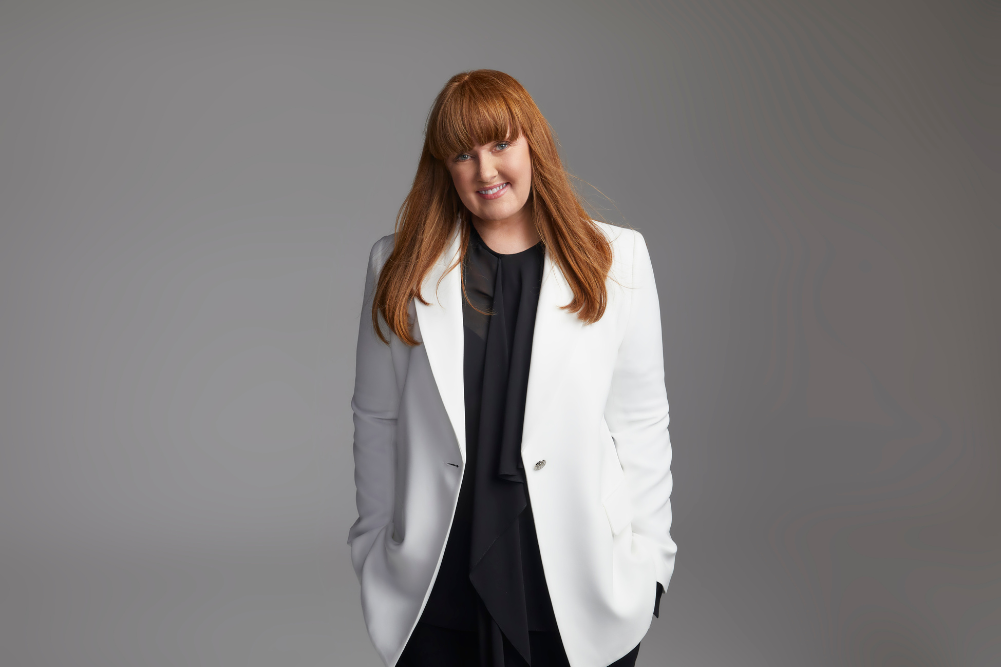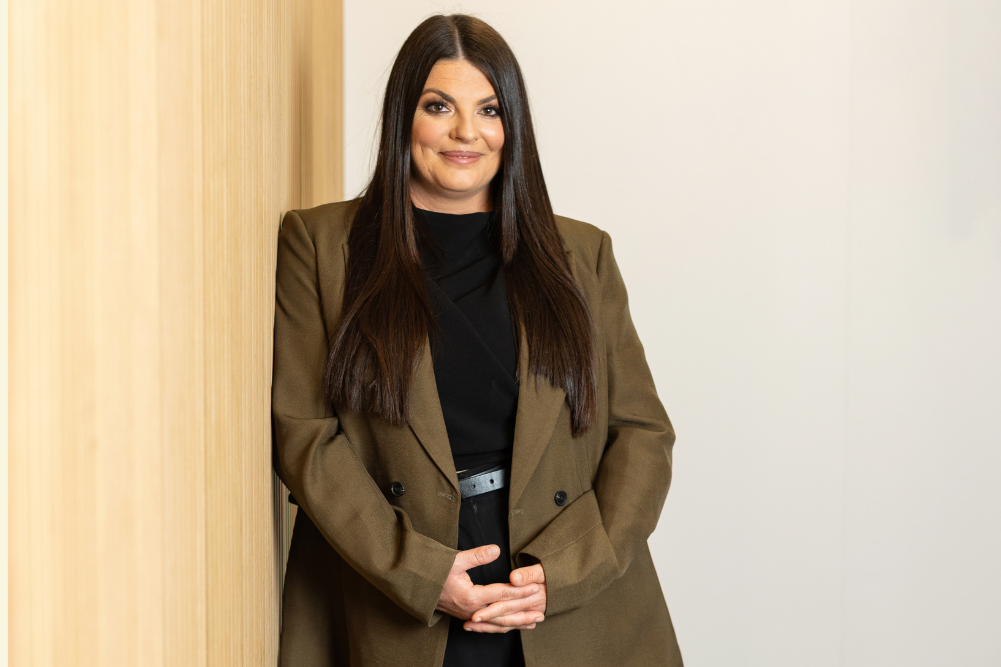
Samantha Payne – Reshaping Miscarriage Care in Australia
Trigger warning: This story contains themes readers may find upsetting.
Samantha Payne turned heartbreak into advocacy, cofounding Pink Elephants to reshape miscarriage care in Australia
For many women, miscarriage is not only a private grief, but a silent one — endured quietly, often without acknowledgement, language or support. Here, we meet Samantha Payne, a woman whose own experiences of pregnancy loss exposed the deep gaps in care surrounding miscarriage in Australia. What began as personal heartbreak became a catalyst for national change, as Payne transformed grief into advocacy, cofounding Pink Elephants and helping reshape how miscarriage is recognised, supported and spoken about.
“I don’t want to leave through the front doors. There’s got to be a back exit,” Samantha Payne begged hospital staffthrough tears. “I can’t go past those baby shops again.” The staffshook their heads, insisting, ‘Sorry, that’s the only way out’. It was after Payne’s third miscarriage, and the heartbreak and devastation never got any easier. Years later, she hasn’t forgotten how alone and unheard she felt in that moment. When Payne finally gave birth to her daughter in 2022 during the pandemic, she discovered that rules could be bent. “We actually had COVID at birth,” says Payne. “And guess what we got? A back exit! I have never been so bloody angry.”
At 41, Payne is now a mother to three children, but she has also lost three children to miscarriage. She isn’t alone in her experience of pregnancy loss. Miscarriage Australia estimates that around 285 miscarriages occur every day in Australia, and that approximately one in four (25 per cent) pregnancies end in miscarriage. Yet some studies suggest the true numbers may be as high as 37 per cent.
Wanting to make sure other women receive more support than she did after loss, Payne cofounded The Pink Elephants Support Network in 2016. Pink Elephants, as it’s known, is a charitable organisation created to support those who have experienced miscarriage or pregnancy loss. Payne, also the CEO, says their mission is, “To ensure no one goes through the experience of pregnancy loss alone, that everyone has access to the circle of support.”
Pink Elephants does this by offering meaningful and compassionate connection for those who have experienced pregnancy loss, advocating for legislative change to better support bereaved parents and giving voice to stories that help break the silence surrounding miscarriage. As a result of Pink Elephants’ advocacy, Australia’s Fair Work Act was amended to include miscarriage as grounds for compassionate leave, allowing parents space to grieve and validating their experiences with pregnancy loss.
Stiffupper lip
Payne grew up in a mining village in the UK with her parents and sister. “I guess a lot of my grit and resilience has come from growing up in the north of England,” recalls Payne. “But, also, the opposite of that was probably [a contributor to] how I struggled with my first losses, and the mental health side of things.” Payne always felt that mental health wasn’t recognised or taken seriously in her hometown. “You don’t talk about it. You just get on with it. It’s ‘stiffupper lip’ kind of territory.”
Payne went to university in London to study media and advertising. This would also be where she’d meet the man that would become her husband. After graduating, wanting to escape the rainy British weather and have a new adventure, Payne and her partner moved to Sydney. She worked as a teacher, and they soon got married, and welcomed their first daughter in 2013.
When Payne became pregnant a second time around 18 months later, she was thrilled to grow their family. But an early scan revealed heartbreaking news, the baby had no heartbeat. “They gave me a sticky note with the letters ‘ERPC’ written on it,” she says. (ERPC stands for: evacuation of retained products of conception.) “I only found out what it meant by googling it.” She was given a phone number for the local hospital to call and book her own appointment. Being late on a Friday, she was given no choice but to wait until Monday for her procedure. She’d have to attend the same hospital ward where she’d joyfully celebrated and held her newborn daughter a couple of years earlier.
Miscarriage support, not silence
Payne went home after the procedure, heartbroken and grieving. “We told friends, but it was very much met with a kind of silence and whispers. ‘Oh, that’s just something you get on with.’ ‘I’ve had one too’. ‘Don’t worry, you’ll be pregnant again soon enough’. Despite me feeling absolutely awful, I internalised a lot of that as advice and moved on.”
While dealing with her grief, Payne met the person who would soon become her friend and co-founder of Pink Elephants, Gabbi Armstrong. Gabbi also had lived experience of recurrent pregnancy loss after experiencing six miscarriages herself. The pair wanted to create a charity that would provide bereaved mothers with the support they felt they never received.
Together, they founded Pink Elephants. They started by hosting focus groups to find out what other women had experienced after miscarriage. A common thread of frustration was the lack of support referral following pregnancy loss. Research by Pink Elephants found that 75 per cent of women report feeling unsupported through their miscarriage experience, while 68 per cent receive no support when told their pregnancy has ended.
“There was a lot of anger at the lack of support referral. They felt the same as me, that when you would leave the hospital system with a baby, you get wrapped in so much support, right?” says Payne. “You get your mum’s group. You get a bounty bag with all your bits in it … And yet we leave hospital without our babies and we get nothing … there’s not even a six-week GP follow up.”
The focus groups highlighted that not only were women’s experiences after loss similar, but so too were the frustrations and emotional burdens that went alongside them. “There was an overarching theme of silence, and feeling silenced,” says Payne. “They felt like it was something they couldn’t talk about. That not only would people around them not understand how they truly felt, but there was almost this kind of cultural gag order of not to speak about it because you’d experienced it before 12 weeks, so therefore you weren’t ‘meant’ to talk about it.”
Pink Elephants
When naming the charity, Payne wanted something that would represent her plans for the organisation, to be a circle of support and love, just like a herd of elephants. When there is a grieving elephant mother in the wild, it’s thought that other elephants will use their trunks to form a physical circle of support around her. “When I found that elephant story, I was like, that’s who we are,” says Payne. “We’re that herd of elephants for those that need it, when they need it.”
Pink Elephants’ research projects aim to not only shine light on the issues faced by bereaved parents, but to give a voice to women who often feel silenced or ignored. One of their reports, published in October 2025, found that women based in remote areas are 1.6 times more likely to experience perinatal death compared to those living in major cities.
It also highlights the challenges these communities face, such as long distances to travel for specialist care and long wait times, as well as often being physically isolated. “They’re sitting, maybe, on a rural farm by themselves,” says Payne. “Their friends can’t just pop in, give them a cup of tea and a bunch of flowers and make them feel seen, heard, all those things. By accessing our support, they get to connect with other people.” Alongside making recommendations for how healthcare providers can better support these women, Pink Elephants provides digital support services such as a live chat with a volunteer Peer Support Companion, who has lived experience of pregnancy loss to help these women feel less alone.
“They’re just grateful that they have someone to speak to. I feel like that’s a huge part of what we do as well,” says Payne. “It comes back to validation and empathy, making people feel heard in their experience. Validating it as grief worthy, so they’re not sat at home feeling like they’re going crazy by themselves.”
Leave for loss
Another theme that Payne kept hearing from focus groups was that women were expected to go back to work immediately following their traumatic loss. There was no compassionate leave allowance for miscarriage before 12 weeks in the Fair Work Act. Instead, time offfollowing miscarriage was often being taken as sick leave. “Women were sharing things like, ‘I’ve got to present in a boardroom and I’m still wearing a nappy. I’m still bleeding,'” says Payne. “Or, ‘I’ve just found out that my baby’s heartbeat stopped this morning at a scan.'”
Payne looked up the legislation on Fair Work Australia and found that there was only Unpaid Special Maternity Leave for pregnancy loss after 12 weeks. “Ninety-eight per cent of miscarriages occur prior to 12 weeks,” says Payne. “So, I was thinking, ‘Someone’s not joined the dots, someone just doesn’t understand.'” She decided to do something about it.
Payne rang Fair Work Australia, notepad in hand with all her research about the impacts of miscarriage and returning to work. “How do I change it?” Payne asked the man who took her call. “He was like, ‘You can’t just change the law.’ And I [said], ‘Surely you can. Surely, you’re going to admit you’re wrong … and here’s all the science behind this’ … I had all my stats ready.”
This was followed by three years of building a case, with the support of experts in law, research and policy change. The campaign was called Leave for Loss. The culmination of their work came in September 2021, when Pink Elephants successfully lobbied the Australian federal government to amend the Fair Work Act to include miscarriage as bereavement/ compassionate leave under the National Employee Standards. The new policy means that all bereaved parents who lose a baby to pregnancy loss prior to 20 weeks are entitled to two days paid bereavement leave, per occasion.
While Payne thinks the leave entitlement should be more than two days, she sees the change as a symbol of something much bigger. “It’s less about the amount of leave. It’s more about the validation that you can’t deny our grief,” she says. “This is bereavement leave because, again, these are our babies. We’re not sick. We don’t have the flu. My baby died. I deserve bereavement leave.”
This change has laid the foundation for some businesses, in partnership and consultation with Pink Elephants, to provide additional leave and support to bereaved parents even further. “Now what we’re seeing, which is really beautiful, is workplaces are offering far more than two days,” says Payne. “QBE, for example, offer 12 weeks bereavement leave for any type of [pregnancy] loss, at any gestation, over a two-year period, and you can break that up as you need it.”
While she acknowledges that changing legislation is a huge accomplishment, Payne’s most rewarding moments are the messages that she receives from women whose lives have been touched by Pink Elephants. “I remember the first one, from someone I didn’t know, and she messaged me, ‘… I want to tell you what a difference this has made for me. I’ve just been on your website and I finally feel like someone understands,’ recalls Payne. “I’ve been the person that felt misunderstood and like I’ve got no one, so to finally have people telling you that, that’s the ‘pinch me’ moments.”
Never walk alone
Payne never forgot how it felt to be forced to leave by the hospital front doors, past happy new and expectant parents, after her third loss. “The letter that I wrote to my hospital about that was infuriating, because there is a back exit and do you know how many women could benefit from that?” says Payne. “It’s not because I’m ashamed of what’s happened to me. It’s because I don’t feel ready to face the world yet and I definitely don’t want to walk past ‘congratulations’ pink baby balloons when my baby’s just died and I’m leaving. So, it’s changes like that that we’re advocating for at a national level … I feel like it’s changing. I feel like we’re starting to be heard now.”
The government has heard and has committed to a grant of $4 million over three years to help Pink Elephants scale up their support services. Payne says this will help them invest in their digital platforms and will also help to address what Payne refers to as a “huge data deficiency” on pregnancy loss. “Really excitingly, next year, there’s going to be the implementation of a national pregnancy loss register that the Australian Institute of Health and Welfare is going to make happen, that’s come out of that funding as well,” says Payne. This, alongside Pink Elephants gathering lived-experience stories, will help paint a clearer picture of the scale of the issue. “We’re going to have this national map of early pregnancy loss experiences, which will future-inform our advocacy, our support and our awareness programs.”
While she is at the helm, Payne says Pink Elephants couldn’t have achieved so much without the help of the herd. “There have been so many incredible people that have walked alongside me at different points in Pink Elephants,” says Payne. “It is a collective, like the elephant circle in the wild, that is ultimately what’s made Pink Elephants successful. So many of us impart different expertise and knowledge,” says Payne. “Like Leave for Loss, that wouldn’t have happened without real lawyers that could actually give me language that I could use in government, rather than just ‘this isn’t okay’.”
Pink Elephants now has a team of six full-timers, plus contractors, around 20 volunteers as Peer Support Companions and a governance board. The organisation also celebrates its 10-year anniversary this June, an achievement Payne is immensely proud of.
When she’s not busy at Pink Elephants, Payne is spending time with her family and playing “Uber driver” to her children. And although she is settled in Sydney, her English heritage hasn’t entirely faded, especially when it comes to sport. “My kids, who live here, are obviously Australian. They support the Matildas. The Ashes are coming up. It’s going to be hilarious in our house, because they’re [supporting] Australia,” says Payne. “I still support England in The Ashes. I can’t not, right? I grew up with that. I think my own dad would kill me!”
And for anyone who has experienced early pregnancy loss, Payne wants you to know, “It’s not your fault. It’s nothing you did. Yes, miscarriage is common, but you deserve the space to grieve your baby in any way that you want to, and there is support. So don’t do this alone.”
If you have experienced pregnancy loss and need additional support contact the Pink Elephants Pregnancy Loss Helpline, delivered by PANDA, at 1300 726 306 or go to pinkelephants.org.au.
Find this article in Wellbeing Magazine Issue 222
Further Reading