Peas
Freshly picked peas are a delight, even to the fussiest of children. Grow your own pods and score a win for the whole family.
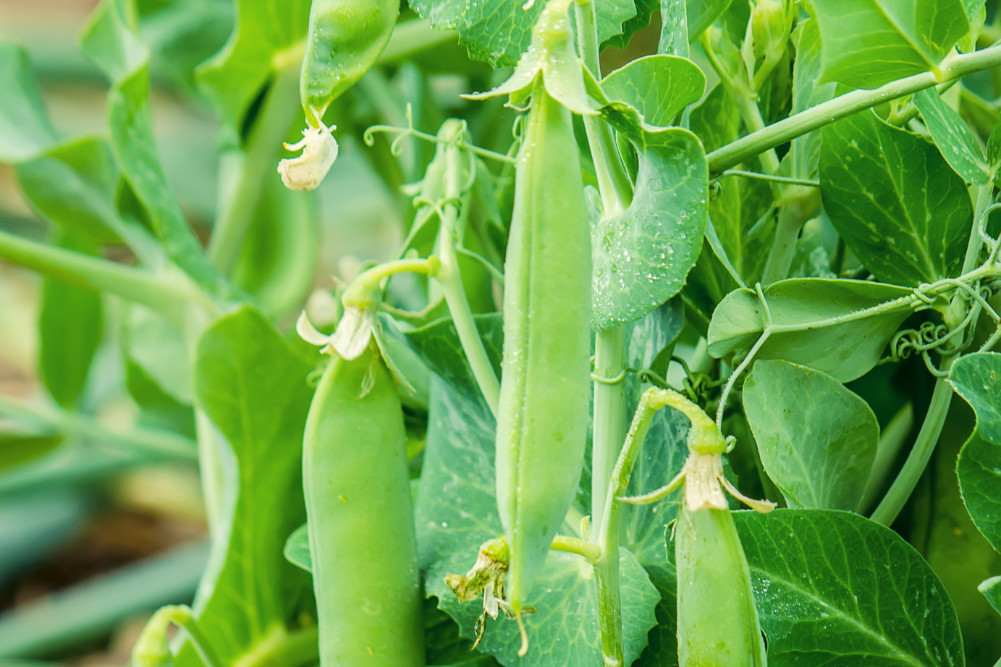
A kilo of pea pods is a great conversation starter. Sit down with your kids around the kitchen bench or table and see what spills out as the peas fall from their pods. First up, your kids may be surprised to discover that peas actually come from pods, not plastic bags.
While it is rare today to find podded peas at the greengrocer or supermarket, they are a perfect winter and spring crop to grow in the garden — even in a container. And don’t let the fact that your children say they don’t like peas stop you from planting them. Another benefit that comes from growing your own peas is the delight in seeing kids who don’t eat their greens tuck into freshly picked peas.
Peas fresh from the garden are very sweet and crunchy, which is probably why they seem so tasty to green-phobic eaters. They grow easily, grow quickly, and you can pick and eat them straight from the plant. Peas take 12 to 16 weeks from sowing to harvest. Snow peas — flat-podded peas eaten pod and all — can produce podin as little as six to eight weeks after planting. Peas planted in autumn crop in winter, and to keep a steady supply, make another sowing in winter or early spring.
Pea
Common name: Peas, snow peas
Botanical name: Pisum sativum
Family: Fabaceae (bean or pea family)
Aspect & soil: Sun; well-drained soil
Best climate: All
Habit: Climber
Propagation: Seed or seedling
Difficulty: Easy
Get growing
Peas grow best through the cooler months of the year, but gardeners can plant snow peas well into spring to harvest in early summer. Grow from seed or buy punnets of seedlings to plant, which speeds up the process. Peas are climbers, so they need support. If you have the space, grow them on a trellis in the vegetable garden or up a tripod of stakes in a veggie bed, raised bed or in the centre of a large container. Peas grow best through the cooler months of the year, but gardeners can plant snow peas well into spring to harvest in early summer.
Peas respond to well-prepared soils, so before sowing, dig in organic fertiliser and incorporate it well to a depth of about 15cm so it is available to the growing roots. Hose the soil so it’s damp at planting time. Sow pea seeds in a 15–25mm-deep hole or drill (a furrow), spacing them about 5cm apart. When the plants begin to grow, help them find the support you’ve constructed by guiding the growing tendrils towards the base of the trellis or teepee. Small twigs poked into the ground can help get pea plants off to a good start.
Good enough to eat
Peas have a reputation for being fattening and many people avoid eating these tasty morsels for that reason. However, this reputation is not deserved. A typical serve of around 50g has only 125kJ. A 50g serve of snow peas has just 70kJ. Encouraging children (and adults) to eat fresh peas provides protein, vitamin C, iron, niacin, zinc and fibre along with plenty of dietary fibre.
Pests and diseases
Problems with pea plants usually occur either at the beginning or end of their lifespan. If gardeners grow peas through the cooler months of the year and give them ample moisture, they are usually trouble-free. Things can be perilous for pea seeds. Ants love peas and may steal them before they’ve had a chance to germinate. A fungal disease called damping off can kill the nutritious seedling if the seed survives and grows. If these problems occur, grow peas in a new spot or large container, or start with seedlings instead of sowing directly. Sowing into damp soil and delaying watering until emergence also reduces disease risk.
Young seedlings can also be attacked by cutworms, which are the soil-dwelling larvae of click beetles. They chew off seedlings at
their base. One way to protect seedlings from cutworm is to protect each tiny plant with a cardboard tube or a foam cup with its base cut off. Sink it gently into the ground to surround the seedling. Once the seedling has hardened and before it reaches its climbing frame, you can gently remove the tube.
A lack of pods in winter may be due to cold or frosty conditions, which tend to delay flowering and fruit set. Don’t panic — once the frost stops, the pods will start producing flowers and fruit. In warmer weather, pea plants can fall victim to powdery mildew, a fungal disease that affects the leaves, covering them with a white powder. Affected pea plants start to die back. If this occurs, simply remove the plants to make way for a summer crop. Foot rot, a disease that attacks the base of the vine, can also be a problem. If this occurs, remove and destroy diseased vines.
Harvesting, storing and preserving
Once the vines start flowering, pea pods are quick to follow. Pick frequently to keep the vine productive. They are ready to harvest when the pods are plump and firm, but can be eaten when the pods are immature. These are known as baby peas or “petits pois” in French. Peas keep well in their shells and store well wrapped in a plastic bag in the refrigerator for up to two weeks. Take a tip from commercial food processors and freeze or bottle them right after harvesting for maximum sweetness. To freeze them so they are loose, shell them then simply spread them out on a tray in a single layer. Once frozen, tip the loose peas into freezer bags. Date and label the bags.
When you go to pull up the vines, you may find some old pea pods that escaped harvest. Don’t let these go to waste. Old peas at the end of the season can be gathered and dried, then stored to add later to casseroles or pea soup. Growing peas helps your garden, too. As they grow, they fix atmospheric nitrogen into the soil via the nodules on their roots. To maximise the nitrogen, plants are dug into the soil after harvest, but pea straw (dried spent pea plants) makes a nutritious garden mulch. If you don’t grow your own, look out for it in spring in bales at garden centres or produce suppliers.