The Compost Connection
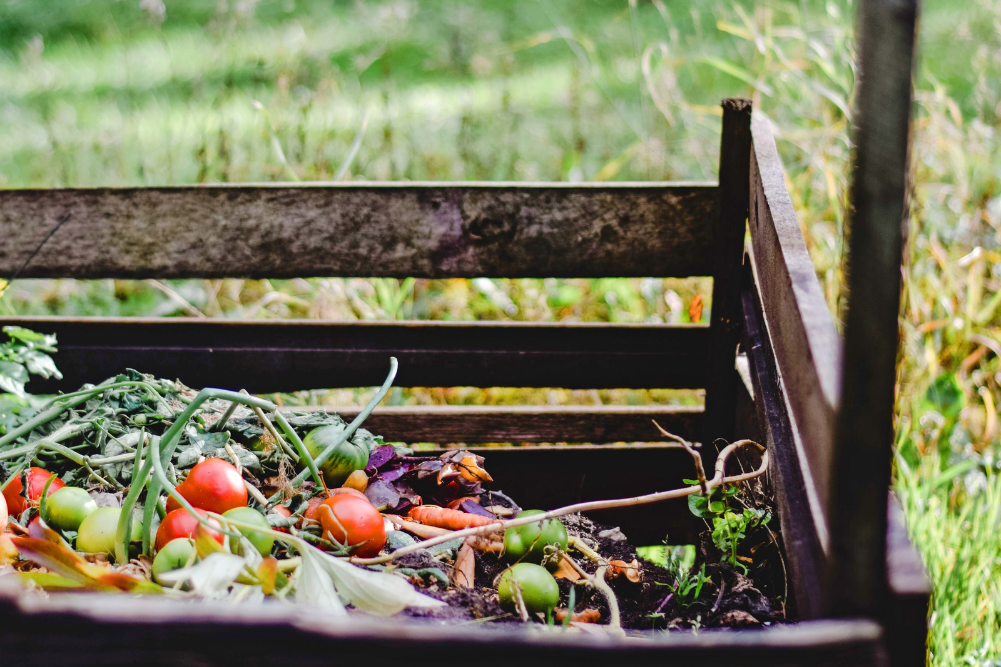
Creating a compost bin helps your garden but also reduces waste, supports the planet, and connects you to your life.
At its most basic level, composting is the recycling of organic substances such as food scraps or twigs and leaves. Through controlled decomposition, this produces a valuable fertiliser that can enrich soil and plants. The matter produced from the decomposition is called compost, but it is much more than a tool for soil enrichment; the process of composting is life-enhancing on many levels. Right now, the world feels as though it is spiralling beyond the control of individuals as tech bro billionaires pursue profit by playing with your attention and emotions while they build massive energy-and water-consuming AI-driving data centres.
It might not seem directly related, but starting a compost bin is one way that you can actually change the world and reclaim come of the values that have been eschewed by specifically changing the world that is immediately around you. Composting might have a “yuck” factor to work through, as compost can get a little smelly, but your sensibilities will get over that because composting not only helps the planet and society, it helps you. If you aren’t already into composting, then you need what any person needs before they embark on a new endeavour; you need
motivation. So, before we get into the practicality of creating a compost bin, let’s take a look at the real and far-reaching effects of composting.
Your garden’s probiotic
Everyone knows the benefit for humans of probiotics and prebiotics. These are substances that either provide good bacteria for your gut, or enhance the growth of those good bacteria. We know that raising levels of good bacteria is just as important as reducing levels of bad bacteria.
In a 2024 study published in the Journal of Food Protection, it was shown that compost can act like a probiotic in your garden. For their study, researchers analysed soils and leafy green vegetables like kale and lettuce from urban farm sites. They compared sites that had used compost in the growing of the vegetables and compared them to sites that had used non-compost fertilisers. They found that soils treated with compost had more bacteria in total, but less bad bacteria. In other words, compost acted like a probiotic, boosting levels of good bacteria in soils.
This is a profound effect, but it is just the beginning of what compost will do.
The compost effect
Composting will nutrify your garden, but the effects extend beyond your back fence. When you compost, you are undertaking an activity that has ripple effects.
Slows the waste stream
According to the Department of Climate Change, Energy, the Environment and Water (DCCEEW), food scraps and organic matter make up between 35 and 40 per cent of the total weight in the average Australian garbage bin. Processing that waste in landfills is costly and polluting. Composting directly reduces the amount of waste that you contribute to the waste stream.
Reduces methane
When organic matter goes to landfill, it usually gets buried under massive quantities of other garbage which cuts off oxygen supply for the organisms that are trying to break down the organics. In the absence of oxygen, the organisms produce biogas as a byproduct of decomposition and that biogas is 50 per cent methane and 50 per cent carbon dioxide. Both of these are potent greenhouse gases. Every bit of composting you do reduces the greenhouse burden of the planet.
Raises awareness
According to the DCCEEW, the average Australian family throws out around four kilograms of food every week. The best way to reduce the impact of food waste is to reduce the amount food being thrown out. Composting means you are putting some of your food waste to better use, but there is also a psychological effect. The act of carrying food scraps to a compost bin or kitchen caddy raises your own awareness of just
how much food you are throwing out and when you are aware you are more likely to make behavioural change.
The global picture
The benefits of composting that we have talked about so far are local and individual, but there is also a large scale picture at play.
In 2022, the University of Queensland had a report of theirs published in the journal Nature Food. The researchers began by noting that at the moment, 30 per cent of the world’s agricultural soil is classified as “degraded” and projections are that this percentage could rise to 90 per cent by 2050. An answer to this problem, according to the researchers, could be “Precision Compost Strategy” (PCS).
Instead of using synthetic fertilisers, PCS is a process that matches specific types of compost to targeted soil and climate conditions. Using PCS
in large-scale agriculture would improve crop yield, enhance soil health, and divert biowaste from landfill. Soil plays a crucial role in ensuring food security and employing compost on a mass and targeted scale would massively improve soil quality.
The researchers point out that employing precision composting will also help fight climate change. Currently in Australia, more than seven million tonnes of biowaste end up in landfill every year. Repurposing that food waste for composting on a large scale can restore carbon in cropland topsoil and have financial benefits as well. For a local council, just diverting 15,000 tonnes of food waste in compositing could save
that council between two and three million dollars a year. The research also shows that through PCS systems, farmers can reduce use of fertiliser by half.
Composting has global implications, but it starts in your backyard and to get started we need some colourful language.
Green and brown
Two simple terms that you need to keep in mind in terms of your composting are “green” and “brown”, which translate to “nitrogen” and “carbon”. It is easiest to think of it in terms of living things are “green” (nitrogen providing), and dead things are brown (carbon providing). Green living things include recent cuttings from trees, green waste such as recent lawn clippings and food scraps. Brown, or carbon, includes dry grass clippings, dry leaves, twigs and shredded paper. Your compost bin will be a combination of these green and brown ingredients, and with these definitions in mind you are ready to set up your compost bin.
Getting started
To be successful with your compost bin, the key is preparation. Cooking up a compost bin is like cooking a meal — you just need to have the ingredients and follow the recipe. You should have two bins next to your compost bin. One bin can be full of twigs. The other bin can be full of grass that you have allowed to dry out with some paper added. These are your “brown” bins, and that way every time you add some green waste to the bin you can add the appropriate amount of brown waste. A rule of thumb is that for every one portion of green waste, you should add one to two portions of brown, so if you add three centimetres of green, add three to six centimetres of brown. Set up a caddy in your kitchen to collect your green waste and you are ready to go. Just follow these six steps.
Step 1: Find a position for your compost bin where it can sit on the ground. Place a piece of chicken wire on the ground. This prevents any intrusions by unwanted visitors.
Step 2: Put your bin on the wire.
Step 3: Put in a layer of dry mixed leaves. Then put your first layer of green waste in, which should be from your garden, including off -cuts and fresh grass clippings, to about 150-200mm thick.
Step 4: Water this layer in with half a watering can of water.
Step 5: Put in your fi rst layer of composted food scraps.
Step 6: From this point, alternate layers of brown and green waste as per the “Compost Recipe”. Ensure that each time you add material, you water it in. Each time you water it in, turn your compost, preferably with a garden a fork. Once your compost is sitting for its maturation period, make sure that once a week you add water and turn it.
Once the bin is full it has to be left and can be used after eight to 10 weeks. To do composting properly, you actually need two bins. One bin will be your working bin that you are adding to, the other will be breaking down. This way you have an ongoing supply of compost.
Coffee and compost
If you don’t have a coffee machine at home and live near a café that churns out piles of coffee grounds per day, ask if you can take some of the grounds off their hands. These will be a great addition to your compost bin.
Coffee grounds are rich in nitrogen — they contain about two per cent by volume. Nitrogen gives bacteria in your compost pile the energy they need to turn organic matter into compost. Don’t worry about acidity, because coffee grounds are not acidic. The acid goes into the coffee brew and the grounds afterwards are close to neutral, registering between 6.5 and 6.8 on the pH scale (7 being neutral).
Note: Uncomposted coffee grounds are NOT a nitrogen fertiliser. Uncomposted coffee grounds need to be composted before being used near plants.
Ins and outs
It is very useful to have a list of what can go in your compost bin and what can’t. You don’t want to undo your good intentions by putting the wrong thing in.
Here is a guide to what you can include:
In
- Fruit and vegetables
- Eggshells
- Grass clippings
- Tea bags
- Leaves
- Coffee grounds
- Houseplants
- Paper (small uncoated)
Out
- Meat
- Fish bones
- Dairy
- Eggs
- Pet faeces or litter
- Diseased plants
- Charcoal or coal
Community composting
If composting seems too time consuming, difficult, or just “icky” for you, then maybe some community composting is what you need. You can still collect your food scraps and take them along to your local community garden where they will be grateful for the addition to their compost bin. You might even go a step further and suggest to friends, neighbours or both that you start a communal compost bin. The sense of accomplishment and community spirit that you generate will be burnished by the knowledge that you are doing something that supports not just yourselves, but also the planet.
Making connection
Composting is not just an act of recycling or garden maintenance, it is an act of connection with yourself, your land, your waste, your life, your community, and your planet.
Terry Robson is a writer, broadcaster and journalist. He writes the More Than Optimised Substack, is the host of The Mammoth In Your Coffee podcast and is represented by Key People Creative Management. Connect with Terry at terryrobson.com
This article is featured in WellBeing Magazine 224