The Meditative Art of Tea
Tea ceremony is more than a ritual. Explore how Gong Fu Cha calms the nervous system, shifts brain states and brings you into the present.
Drinking tea as a form of meditation is becoming more popular around Australia in tea houses, mindfulness settings, retreat spaces and at home. However, this quiet ritual of going inward is anything but new. Tea has long been a way to slow time and sharpen attention. Today, this non-digital ritual is revealing itself as a powerful antidote to modern life: slow, sensory and exquisitely grounding.
At its heart, tea ceremony is about presence, precision and reverence for the leaves. Unlike the Western habit of brewing and extracting everything at once, traditional tea practice draws out layers of flavour over many small pours. You might drink eight to 15 infusions from the same leaves in one sitting, each tasting slightly different as the tea slowly opens.
Within the wide landscape of Asian tea rituals, Gong Fu Cha (which translates to “making tea with effort”) stands out as a refined Chinese practice.
Chinese origins of Gong Fu Cha
Tea has been part of Chinese culture for thousands of years, and this particular style of brewing took shape in southern China, especially in the Chaozhou region of Guangdong and the Wuyi Mountains of Fujian. For centuries, Gong Fu Cha remained purely a regional practice, enjoyed mainly by those with the time and means to linger over many rounds of tea. Its wider revival came in the 1970s, when the Han Chinese who fled to the island of Taiwan helped bring the method to a broader audience. Today, it is recognised as a meditative art shaped by Taoist and Zen principles, where attention, timing and simplicity matter as much as the tea itself.
Present-moment awareness
Tea ceremony is an invitation into the now, one deliberate cup at a time. Heidi Lampard, retreat and tea ceremony facilitator in the Northern Rivers region of New South Wales, remembers when tea became something more than a drink to consume. “Tea became a presence, a teacher and a way of being,” she says, a sentiment that mirrors the core Chinese philosophical roots of the practice.
From Taoism comes the idea of flowing with natural rhythm. Zen Buddhism imparts the commitment to full presence in simple acts, while Confucianism shapes its respect for order and refi nement.
If meditation is often misunderstood as the elimination of thought, tea ceremony offers a different perspective. Ryoichiro Ishimatsu, tea practitioner and founder of Yohaku Space and FOR REST, says, “To sit with tea is to return to the present moment.
The scent of leaves, the warmth of the cup, the quiet rise of steam draws us into intimacy with life as it is, cultivating stillness and reverence. Meditation becomes less about emptying the mind and more about remembering how to be fully here.”
Every movement in the ritual is intentional. In a group setting, the tea practitioner warms the cups, awakens the leaves, pours the tea with control, meets each guest’s eyes before serving and offers the cup with both hands. A beautiful rhythm unfolds as the cups travel between the host and the guests, row by row. These actions are more than theatrical.
They slow the nervous system and turn tea drinking into a moving meditation.
All about the senses
In yoga, the term pratyahara refers to the withdrawing of the senses from the external environment to your inner landscape of being. It is a preliminary stage to deeper meditation. Similarly, tea ceremony draws all your perception into one experience. As you engage your senses during tea ceremony, you feel as if you’re transported from your thinking mind into the body, without going anywhere at all.
“Flavour, aroma and temperature are gateways into embodiment. The warmth in your hands, the rising fragrance, listening to the sound of pouring and the first gentle sip are sensory anchors that pull you out of the head and into the meditative state. The senses are where presence lives” explains Lampard.
As the ceremony continues, your attention becomes steady because the ritual requires it. You watch the colour of the tea shift. You notice how the aroma changes from pour to pour. You observe the timing of the pours. Concentration happens without effort. After several rounds, the sense of “doing” the ritual starts to soften. There is only awareness moving through action, and presence becomes continuous rather than momentary.
“A tea ceremony isn’t about the tea itself, it’s about the way we meet it. We prepare tea to arrive into the breath, the body, the felt sense and then the quiet wisdom beneath all the noise,” adds Lampard.
Sometimes, without drama or announcement, even that falls away. There is no meditator, no ritual, no tea.
You get a glimpse of awareness being aware of itself, even if that lasts for only seconds.
Inner alchemy
In Taoist philosophy, the path of inner cultivation is described as a process of refinement, where jing (essence) is transformed into qi (life force) and qi into shen (spirit), before returning to the greater flow of the Tao. In Gong Fu Cha, water, leaf and heat form the physical essence of the tea. Aroma, circulation and breath bring it to life. And through stillness and clarity, the experience subtly lifts into something more spacious. Each infusion is a small cycle of transformation.
Tea ceremony reflects the Taoist principle of Wu Wei, or effortless action. Nothing is forced, careless or rushed. Movement is precise without becoming rigid. Stillness is present without becoming dull. This is action without friction, where effort and ease exist at the same time.
“For me, the essence is qi — the quiet current of energy moving through all things,” says Ishimatsu. “In tea ceremony, nothing is forced: the way water comes to boil, the way we lift and pour, the way we hold a bowl or a room. When we listen deeply to breath and space, action naturally flows on its own. This is wu wei: allowing energy to guide the form.”
When you sit in tea ceremony, the body begins to respond without instruction. The breath naturally drops lower into the belly. The spine lengthens. The chest softens and opens. The mind grows bright yet calm. In Taoism, this harmonious state is an expression of alignment with the natural way.
Neuroscience angle
Tea ceremony creates the ideal conditions for a shift in brain state. As the ritual begins, the busy, problem-solving mind starts to quiet. Brainwaves gradually move out of fast beta, which dominates during stress and mental effort, and into slower alpha and theta states, the brainwave patterns seen in meditation, creativity and deep relaxation. The body becomes calm while the mind remains clear.
At the same time, the brain’s default mode network, the system responsible for self-talk, time pressure and mental looping, begins to soften. This network is what keeps us caught in planning and rumination. The repetitive, sensory nature of the tea ritual gently interrupts it so that your attention shifts from internal noise to the sensory experience. As this network quiets, you may feel spacious, timeless and unusually present.
The tea itself also plays a subtle role in shaping this state. Natural compounds such as L-theanine and caffeine combine to produce calm alertness.
The nervous system settles without becoming dull or jittery. The subtle shift in the body, together with rhythmic movement and sensory attention, create a neurobiological doorway into the expanded states linked with meditation.
At-home tea ritual
You don’t need to attend a formal tea ceremony to experience the grounding effects of ritual. The essence of tea practice can live just as powerfully in your own kitchen. It’s less about technique and more about the quality of presence you bring to it.
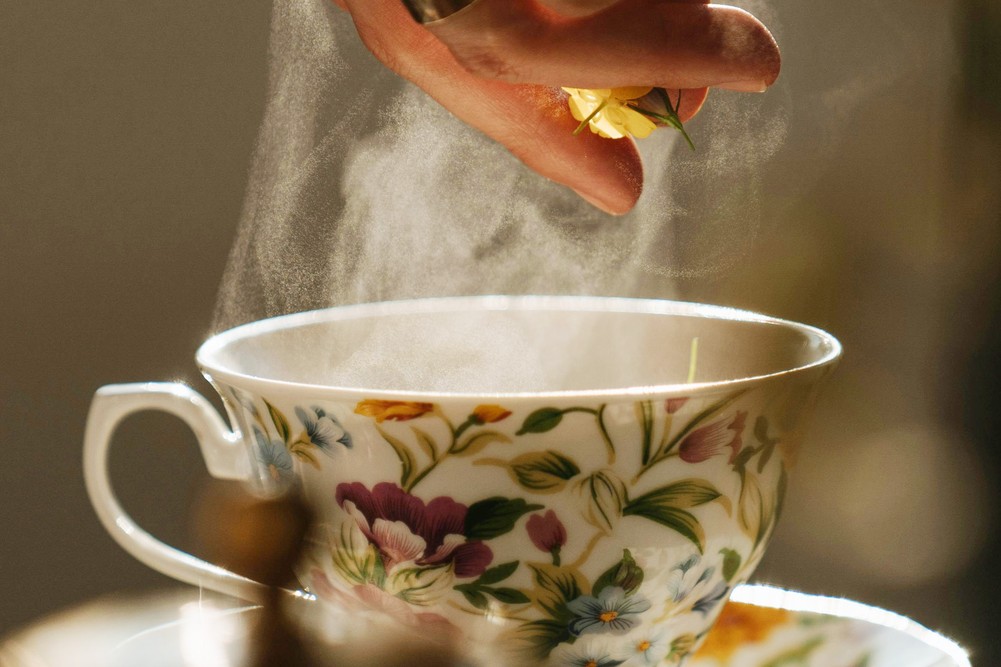
“Ritual doesn’t require perfection, just intention,” explains Lampard. “Slow your breath, place both hands around your favourite cup to feel the warmth and inhale the steam and aroma. This transforms an everyday cup into a mindful pause.”
Kate Dalton, naturopath, herbalist and founder of Mayde Tea, agrees. “Ritual engages both mind and body, creating a moment to pause, breathe and reset,” she says. “Rituals activate the parasympathetic nervous system, lowering cortisol levels and improving emotional regulation.” In other words, the body responds to ritual whether the setting is formal or more familiar.
Essential elements of Gong Fu Cha
In traditional Gong Fu Cha, oolong teas (particularly Taiwanese and Wuyi styles), pu’er and high-grade green or white teas are most used. Pu’er is a Chinese black tea that undergoes post-fermentation and aging. These teas have enough complexity to change throughout the course of several infusions.
At home, however, any tea can become part of a ritual. “Certain teas naturally support a meditative state, like shou (ripe) pu’erh, oolong or gentle botanical blends,” explains Lampard. “In tea ceremony, what matters most is how the tea growing and harvesting has been tended to and the relationship you have with it.”
A daily practice
A few simple principles can help turn a daily cup into a steadying practice. Dalton explains that consistency, mindful preparation, savouring the moment and reflection are what transform tea from a habit into a ritual “Choosing a regular time each day can anchor your practice,” she says.
Here is how Dalton suggests creating a daily practice with herbal tea:
- Select your herbs: Choose a blend that resonates with your needs. For stress relief, chamomile, passionflower and lavender work beautifully together. For evening relaxation, consider adding valerian or lemon balm.
- Invest in quality ingredients: Organic, wholeleaf herbs preserve flavour and potency. Avoid artificial flavourings or additives that can undermine health benefits.
- Choose the right equipment: A small teapot or infuser allows herbs to expand fully and release their compounds. Pouring into a favourite cup adds a tactile, sensory pleasure to your practice.
- Set the environment: Create a quiet space. Consider soft lighting, a candle or incense, or gentle music. The environment signals to your nervous system that it’s time to relax. Scents and sight pull you into deeper presence.
- Mindful brewing: Heat water to the recommended temperature for your chosen herbs. Steep for the appropriate time (usually 3–5 minutes). Use this time to breathe deeply and focus your attention on the present.
- Sip with intention: Drink slowly, noticing how the warmth spreads, the aroma engages your senses, and the body begins to soften. Allow yourself to fully experience the pause.
- Reflect: After finishing, consider journalling one intention for your day or a note of gratitude. Even one or two sentences reinforce the meditative benefit of the ritual.
Gong Fu Cha as teacher
After a mindful tea session, you may notice a return to yourself. There may be clarity, emotional release or a gentle lift in energy. As Lampard observes, people often leave with the feeling, “Oh … I can hear myself again.”
With this reconnection comes a renewed sense of trust in the greater pulse of life. Intuition sharpens.
Gratitude arises. The body feels grounded rather than rattled. Lampard describes it as a remembering of what already exists beneath the noise, an awareness of belonging that doesn’t need to be forced.
Tea also carries a wider teaching about relationship. “Tea teaches harmony within ourselves, with one another and with the living world,” says Ishimatsu. “It invites us inward: quiet enough to listen, slow enough to feel, soft enough to receive and remembering that we are part of nature, not separate from it.”
In this way, the ceremony becomes less about fixing or improving anything and more about returning to simplicity. A warm cup in the hands. An unhurried breath. A moment of stillness that doesn’t demand anything at all. “Tea invites us into the quiet places within that we often rush past,” says Lampard. “We remember who we are beneath all the doing and complexities of life.”
Often, that is just what we need to once again feel the deeper truth of being alive.