Singapore: A New Kind of Blue Zone
Singapore became the world’s first engineered urban Blue Zone and other cities can learn from its approach to longevity.
Dan Buettner, the author behind the wellknown Blue Zones study, has spent close to two decades researching the world’s longestliving cultures. In places like Sardinia, Italy; Okinawa, Japan; Nicoya, Costa Rica; Ikaria, Greece; and Loma Linda, California, he distilled the secret to their health and longevity into a set of lifestyle pillars: plant-rich diets, regular physical activity and strong social bonds. At their core, these principles are rooted in simple, traditional practices: cooking at home, spending time outdoors, using hand-held tools and walking everywhere. Blue Zone communities are less touched by the conveniences, processed foods and distractions that define modern life.
Could those principles hold up in a hyper-modern, high-pressure city? Buettner thinks so. In 2023, he recognised Singapore as the world’s sixth Blue Zone.
The very first one to be urban and engineered. It’s what he calls Blue Zone 2.0: a model of longevity built not on centuries of tradition, but on deliberate design, forward-thinking health policies and a commitment to collective wellbeing.
The Singapore Blue Zone: Engineered for longevity
Singapore is a fascinating case study because it challenges the assumption that health and longevity only belong to rural or slow-paced communities.
Unlike Sardinia or Okinawa, Singapore didn’t inherit generations of traditional knowledge about ageing well. Instead, the city-state built its own framework from the ground up. Here, in one of the world’s busiest, densest cities, public health is treated as a national priority, urban planning considers collective wellbeing and policies are designed with prevention at the centre. This has resulted in a higher-than-average life expectancy (83 years) and an increase in healthspan (years spent in good health). So, how exactly has Singapore engineered a culture of longevity and what lessons can other cities take away?
A whole-of-government approach
Sarah Mineko Ichioka, urbanist, strategist, author and founder of cross-disciplinary studio Desire Lines, attributes the positive impacts on the residents’ healthspan to the Singapore government’s long-term commitment to the provision of physical infrastructure for active living. This includes safe, affordable public transport, walkable and bike-friendly routes and parks that seamlessly blend natural spaces with free outdoor exercise facilities. Walkable neighbourhoods and an accessible public transport system reduces reliance on cars and integrates movement into daily living.
“Singapore is distinguished by its long view, ‘wholeof-government’ approach to planning and policy implementation, and this is evident in the breadth of programs that seek to support healthy lifestyles, from healthier-choice food labelling to subsidised access to community sports facilities,” Ichioka adds.
The importance of this approach is reflected in Singapore’s 2024 Urban Systems Study by the Centre for Liveable Cities, which identifies three pillars in planning a healthy city: protecting citizens from disease through clean air, water, sanitation; building a resilient healthcare system that adapts to population needs; and promoting everyday wellbeing by creating infrastructure that makes healthy choices easier.
Integration of nature into urban design
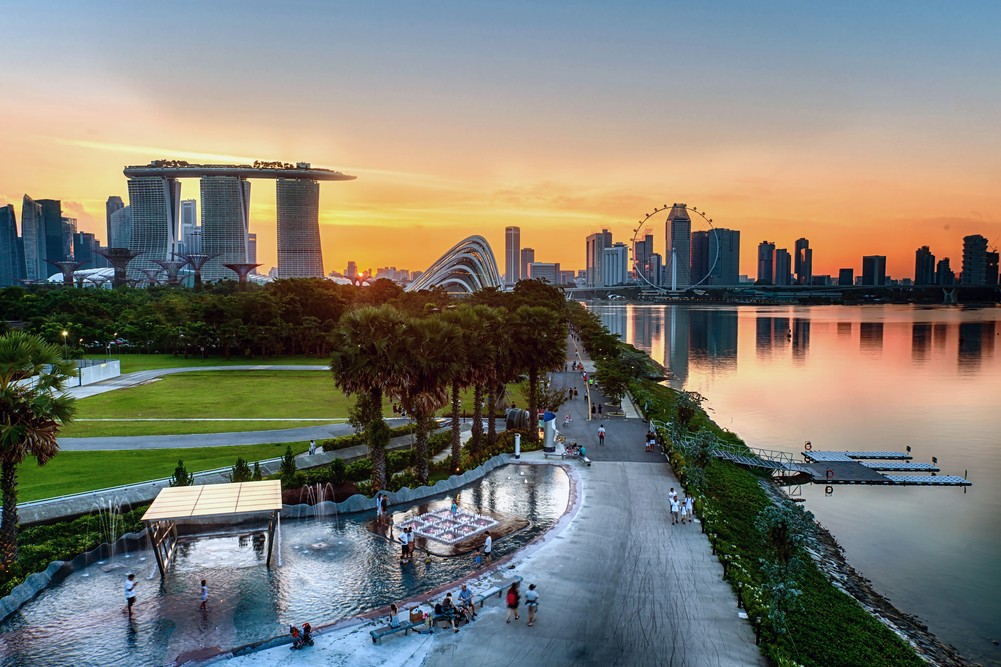
There has been a significant investment in making neighbourhoods deliberately walkable. This includes green infrastructure, such as the extensive Park Connector Network, which threads through neighbourhoods, linking parks, waterfronts and green corridors into a network of walkways and cycle paths.
“This informed, long-term approach to green space development is yielding tangible benefits in supporting community health,” Ichioka explains.
Ichioka and her colleagues have also explored the wellbeing impact of greenery in cities. Their research shows that retiree-led community gardens deliver measurable wellbeing benefits, while new therapeutic gardens are showing promise in addressing dementia and other age-related health challenges.
An example of the successful integration of nature into urban design can be seen in the Bishan-Ang Mo Kio Park project — a concrete canal that has been “rewilded” as part of Singapore’s Active Beautiful and Clean Water Programme (ABC Waters). In addition to providing flood control and water purification, the park is now a popular recreational and social hub with documented wellbeing benefits.
Ichioka describes Singapore’s vision of a “City in Nature” as a welcome shift, one that recognises the essential role of natural capital in the nation-state’s long-term thriving. By integrating nature into the urban design, the city achieves multiple benefits, including “cleaning the air and water of pollution from industrial and transport emissions, mitigating the urban heat island effect (of increasing concern with global warming trends), and providing shelter for non-human species with whom our living systems are interdependent,” she explains.
Ageing well
Over the past decade, the city-state has rolled out a comprehensive Action Plan for Successful Ageing, first launched in 2015 and refreshed in 2023.
Ichioka explains that it is vast in scope, spanning everything from career coaching and digital literacy for seniors to dementia support, volunteer pathways and end-of-life planning.
The “Healthier SG” initiative, launched in mid-2023, encourages residents to enrol with a family doctor who provides tailored health plans, regular screening, vaccinations and lifestyle guidance. The program is supported by digital tools such as the Healthy 365 app and wearable fitness trackers, nudging healthier habits and linking patient data across the health ecosystem.
Other healthy lifestyle initiatives include the Healthier Ingredient Development Scheme (HIDS) that aims to improve the quality of food consumed by Singaporeans when dining out, by encouraging the food industry to switch to high-quality, healthier ingredients. Public health campaigns that gamify fitness, anti-smoking campaigns, as well as taxes on sugary drinks also contribute to healthier choices for Singaporeans.
Social factors
When we talk about longevity, it’s tempting to focus on healthcare systems and high-tech medicine, but the Singapore Blue Zone model reminds us that social infrastructure is just as important. Intergenerational housing, volunteering pathways, well-designed public spaces and community programs, such as the many provided for in the Action Plan for Successful Ageing, create connections that contribute to long-term wellbeing.
“They are essential complements to more formal medical systems in supporting long-term health,” says Ichioka.
She also cites a recent study out of Denmark that demonstrates the added importance of investment in infrastructure in the form of robust civic participation when it comes to longevity. “Societal factors such as political freedom and democracy also correlate with slower rates of ageing,” Ichioka explains.
Singapore is renowned for safety, order and efficiency, however this means many parts of life in the city-state are highly regulated. Media, online platforms and public speech are carefully governed.
Some observers note that this creates limitations on press freedom and open civic debate.
Intergenerational housing
Design matters too. The award-winning Kampung Admiralty is an example of embedding public health goals into planning frameworks. A “vertical village” for seniors, it stacks housing, healthcare, childcare, a community plaza and public green space into one integrated hub. This removes many of the barriers that often isolate older adults. Medical care, spending time in nature, accessing healthy food or connecting with a neighbour is easily accessible.
Barriers to adoption
For all its success, Singapore still faces challenges. Studies show that long working hours are considered “non-negotiable” for many young professionals due to cultural pressure. This results in a sense of time poverty. Instead of spending evenings in community spaces or outdoors, many default to recovery through screens, convenience food or rest. Over time, this erodes opportunities for connection, movement and civic participation.
Ichioka speaks about the importance of shifting this dynamic by giving younger generations real opportunities to connect. She believes that shared success starts with communities. Her point is a reminder that building healthy cities isn’t only about infrastructure such as parks or transport, it’s also about creating cultural permission and practical avenues for young people to engage. Off ering flexible hours and community programs outside of traditional work times that move young people offscreens and into public spaces will not only benefit the health of young adults, but can also strengthen intergenerational bonds.
Beyond sustainability
While Singapore is often praised for its conservation projects and nature-based initiatives, Ichioka urges caution before holding it up as a fully sustainable, let alone regenerative, model. The city-state still ranks among the top 25 nations for per-capita emissions, plays a central role in carbon-intensive industries such as shipping and aviation, struggles with the prevalence of single-use plastics, has heavy reliance on concrete and glass, and dependence on lower-paid migrant labour.
“My great hope for Singapore,” outlines Ichioka, “is that it will one day adopt the holistic framework of planetary health, one that understands that the health of all humans and the health of the natural systems that sustain us are fundamentally interwoven. I hope the whole-of-government approach is deployed in transformative services to this understanding.”
What other cities can learn from the Singapore Blue Zone
Other cities can draw valuable lessons from the Singapore Blue Zone approach to longevity, while keeping in mind the unique context in which it operates. As Ichioka notes, Singapore is “an extremely wealthy city-state” with a long-standing political structure and a highly professionalised civil service, meaning not everything that works there will translate elsewhere.
Still, the broader principles are widely applicable. “Other cities and countries might do well to adopt more joined-up approaches, for example task forces or special-purpose organisations that are empowered to bridge across or work between departments, divisions and sectors to research, design and deliver better places and policies for the wellbeing of their residents of all ages,” advises Ichioka.
The bigger picture
Singapore has rejected a “growth at all costs” mindset that is still prevalent in many modern cities around the world. The city-state shows us what’s possible when longevity is engineered through the alignment of policy and public health. It’s not just about medical care; Singapore incorporates thoughtful city design, connected communities and systems that foster belonging. However, as Ichioka reminds us, sustainability, often framed as “doing less harm”, is no longer enough.
With the planet already under strain, she argues we need to move toward regenerative design: prioritise the health of people while actively restoring and renewing the natural environment. As Ichioka puts it, “The flourishing of all life, for all time.” This means looking beyond just carbon emissions to also address bigger issues such as inequality and overconsumption, while making sure solutions are grounded in the unique culture and ecology of each place and shaped by local communities.
Traditional Blue Zone communities taught us the value of environments that support movement, social bonds, plant-rich diets and meaningful connection to nature. In future-ready modernised cities, human wellbeing will rely on the ecological systems that sustain it. This requires policies and design frameworks that integrate activity, connection and access to nature into daily life, while also addressing structural challenges such as emissions, resource use and equity.