Nextmed and the future of longevity
AI in medicine is changing how patients get diagnosed. One man’s cancer delay led him to build an AI system that outpaced a team of specialists.
Steve Brown is a name not well known to Australian audiences. A celebrated documentary filmmaker, digital healthcare pioneer and a consumer media and entertainment specialist, he was also one of the early speakers at the international Nextmed conference held in effervescent San Diego, a hub with optimism coursing through its veins, midway through 2025. This event showcased luminaries and innovators from the worlds of health and biotechnology who were present to chart the evolutionary landscape of longevity medicine and the expectation of its emergence and rapid progression to possibly dominate the way health care is delivered to all of us.
In 2024, Brown developed some troubling symptoms, weight loss and fatigue, which often signify some illness of concern is unfolding. He underwent a battery of tests, visited a number of specialists and ultimately was seemingly investigated exhaustively with nothing showing up, not an unusual experience for someone having to negotiate the harrowing quagmire of medical scrutiny when their illness eludes the microscope of conventional wisdom.
It was only later when Brown re-entered the medical system, visiting the ER with seemingly innocuous indigestion, that the physicians looking after him then re-examined his concerns and instituted further testing, which revealed the mortifying diagnosis that he was sadly suffering from multiple myeloma, a potentially lifethreatening form of blood cancer.
AI in medicine: meet the bots
Brown then wondered why after consulting with so many specialists and medical experts it had taken so long to explain his symptoms and arrive at the appropriate diagnosis, an experience he knew was familiar to many. Having already operated in the field of artificial intelligence (AI)— a pioneer in AI in medicine — he then went about building his own AI model. Using what is called in AI vernacular an agentic system, code for a top-of-the-range model, he developed a super-bot called “Hayley”. At his presentation, he demonstrated how he was able to feed all his laboratory and investigative data to this agent and within milliseconds, in a charmingly empathetic and reassuring manner, the solution to his medical conundrum was delivered together with a directive for managing his condition, a stark departure from the customary specialist encounter that countless patients might have to endure in the real world.
But Brown’s work wasn’t finished yet. He set about constructing further specialist AI robots which could provide unique insights to their colleagues, discussing and even debating how his illness could be treated and, to top all of this, a chairman of the board agent called “Hippocrates” was devised to integrate all of these specialist inputs so that a cohesive plan of action could be generated.
Brown was at pains to explain to his audience that his robotic geniuses are not intended to replace physicians and specialists. Their purpose is to help hapless sufferers negotiate the morass they are faced with as they deal with the complexities of their condition, treatments that are not always successful and nearly always compounded by distressing side effects. For those who wish to acquire the services of these agentic robots, Brown is looking at rolling them out within the next year.
Brown’s presentation encapsulated the fundamental message of the Nextmed conference — that AI would increasingly pervade all medical interactions — and the race was on to formulate agents with an intelligence that could potentially resolve all dilemmas eluding the expertise of even the smartest of physicians. While Brown’s assertion — that this technology is intended to empower patients so that they can deal with their health challenges with greater savvy while they still depend on their doctors — is supposed to be reassuring, it’s hard to imagine how doctors will not become increasingly redundant as robots with greater smarts usurp our jobs as they expropriate the medical arena.
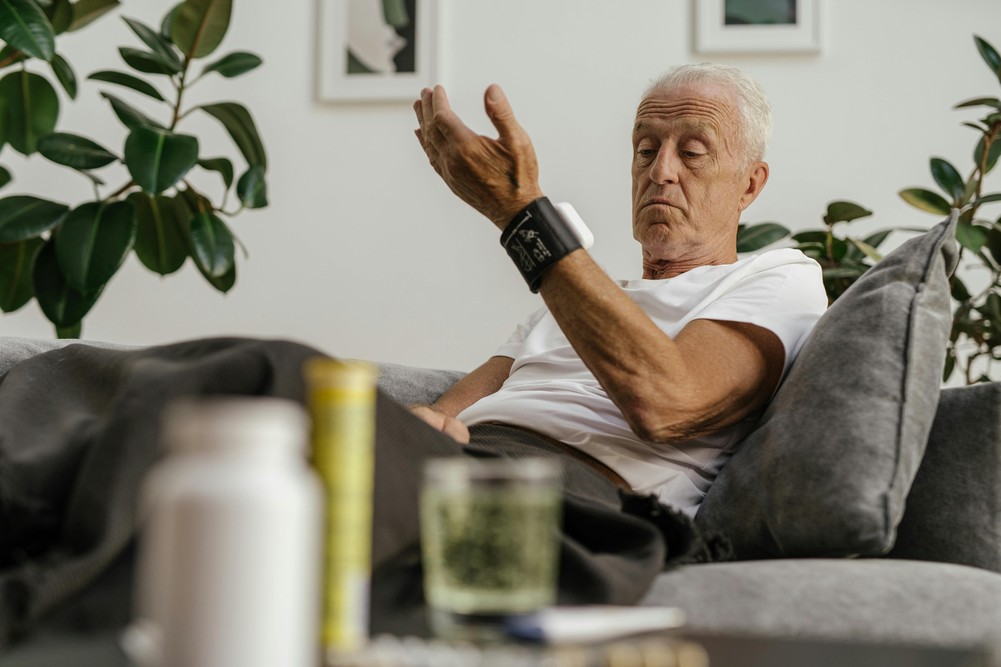
For those devotees of the measured self — who want to utilise this innovative automation and AI in medicine to guide their biochemical, nutritional and hormonal wellbeing as they traverse their longevity journey — lots of measuring will be needed. Smartphones, Oura rings, Apple watches, devices that quantify your oxygen saturation, document your heart rate, sleep patterns, daily steps and so on are essential. You’ll need to record your eating patterns, have extensive blood work (here you still might need to engage with an anti-ageing physician who knows which ones are pertinent), do a genomics test which uncovers predispositions and inherited risks, collect your stool for microbiome testing and have a whole-body MRI scan.
Then you can feed all of this health information to your AI du jour, who will compare your accomplishments with the data of a whole bunch of other longevity enthusiasts to provide you with a personalised program that will enable you to achieve peak performance.
I just have one question for Steve Brown’s agentic prodigies and all the other artificial masterminds that are about to take over our universe: if we don’t yet know what causes ageing and all of our organs are ageing at a different rate, can you solve this mystery and tell me what to do about it? Once machines can do this, who needs doctors?