Women’s Longevity
I was six months postpartum and ready to prioritise my health again. I needed something to get me back to lifting weights, eating more protein and fibre and feeling comfortable in my new body, post two babies. I had heard about Everlab from my best friend and so I decided to start there. My goals going into it were pretty specific: I wanted to get across my cholesterol levels, which have always run high due to genetics. I wanted to understand whether any food intolerances were making my life harder, I wanted to lose some of the post-baby weight and I wanted, broadly, to optimise. To feel well rather than simply functional, surviving. I wanted to have a plan, not just a vague sense that I should eat more vegetables.
What I didn’t expect was how much data was to be discovered and how empowering, rather than overwhelming, it could be to see it all laid out clearly.
Everlab is an Australian preventive health and longevity platform. The premise aligns with everything I believe in: instead of waiting until something goes wrong, you get comprehensive data about your health now, have it interpreted by clinicians who understand both the numbers and the science of longevity, and build a personalised plan to address what needs addressing and protect what doesn’t.
For a long time, longevity research was built almost entirely on male data. The science of ageing, the biomarkers we tracked, the interventions we celebrated — most of it was developed with men as the default. Women, and particularly the hormonal complexity of female biology across a lifetime, were largely an afterthought. Thankfully, that’s changing. There’s a growing recognition that women’s longevity needs its own framework — one that accounts for the seismic shifts of perimenopause and menopause, the postpartum period, and the way conditions like cardiovascular disease, autoimmune disorders and cognitive decline present differently in women. Everlab sits right at that frontier. Finally, diagnostics that take female biology seriously and data that speaks to where I am, not where a male-normed reference range assumes I should be.
Prevention is the key
Dr Steven Lu is the founder of Everlab and when I sat down to interview him, the first thing he said that stopped me in my tracks was this: the Australian healthcare system is like having the world’s greatest fire department but no smoke detectors.
Dr Lu is a GP with a background in preventive cardiology and medical research. He lectures at the Royal College of General Practitioners, has worked with the Victorian Department of Health on the Covid-19 response program, and has spent years trying to understand where the real opportunities are in healthcare. His answer, after all of that, was prevention.
“Prevention is the key,” he told me. “But then what is actually going to unlock that in a practical way?” His answer was Everlab: a tech-enabled platform that pairs comprehensive diagnostics with clinical expertise and, critically, with tools that make it easy for people to actually do something with the information they receive.
What struck me most about talking to him was his framing. This is not a fear-based model. It’s an opportunity-based one. The red numbers on my results, the out-of-range markers, they are not meant to scare me. They are meant to focus me. As he put it: “It’s not ‘I wish I had no problems.’ It’s ‘I want to know where the weaknesses are, because then I can do something about it.'”
Dr Lu spoke about the clinical blind spots he sees most frequently: cardiovascular disease (still the number-one killer of both men and women in Australia, with one Australian dying every 12 minutes from a cardiovascular event), cancer in younger people, bone loss, hormonal health, gut inflammation. And then the behavioural blind spots that sit alongside them: the assumption that because you exercise and eat reasonably well, you must be fine. “We see triathletes with coronary artery disease,” he said, matter-of-factly. “These are people who, if you saw them on the street, you would assume were healthy. We have to be data-driven in making those assumptions.”
The numbers from their internal audits tell a piercing story. Of Everlab members referred for colonoscopy (with a median age of around 43), 52.6 per cent had an adenoma or precancerous polyps. Most of them had zero symptoms. This is, as Dr Lu put it, both the problem and the opportunity. Bowel cancer is now the deadliest cancer in Australians under 39. The national screening program doesn’t start until 50. The gap between those two facts is where preventive medicine lives.
Before Everlab, Dr Lu ran a premium boutique private practice where he did something very similar to what the platform now does but at significantly higher cost and with far more of his own time involved in manually synthesising data. Technology, he explains, is what makes this kind of care accessible rather than the exclusive domain of the very wealthy. “If you want it to be more accessible but deliver even more value, you have to use the tools that we have.”
The benefits to annual testing
The argument for regular comprehensive health testing sits alongside the same logic we already apply to other areas of our lives. We get our teeth cleaned once or twice a year. We have our car serviced. We update our financial plans. The body, though, we often treat as something that will simply signal if it needs attention. Except, as Dr Lu points out, many of the most serious health conditions do not signal. Not until they’re already advanced.
For women specifically, the case is compelling. Bone density begins to decline earlier than most people realise. Cardiovascular risk changes with hormonal shifts across the lifespan. Metabolic function, body composition, iron levels, thyroid health, these are all things that can drift quietly in the wrong direction while you feel broadly fine. Having a baseline, a snapshot of your health at a given point, means that when things do shift, you can see it clearly and respond early.
“The biggest return on investment for your health,” Dr Lu told me, “could be hormonal, it could be inflammation, it could be losing fat, building muscle, reducing cardiovascular risk, cancer screening, sleep, mood. What is it? Have data, come up with the right insights, have a strategy, and then you populate the tactics.”
This, more than anything, is why I think annual testing matters. Not because it will reveal catastrophe (though sometimes it does and catching that early is everything), but because it gives you a strategy. And strategy, in health as in everything else, beats good intentions every time.
My results: where I stood
The Everlab program covers five key health domains: cardiovascular, metabolic, musculoskeletal, cancer risk and organ function. Each area is assessed through blood work, physical testing and, in my case, a DEXA scan for body composition and bone density. The results arrive in a detailed digital dashboard that shows you not just where you’re optimal, but where you’re suboptimal, out of range or simply missing data.
When I received my results, I was quite happy with where I landed. However, there were clear areas to work on and having them named and quantified made all the difference.
My cardiovascular panel was a mixed picture, which is familiar territory for me. My Lipoprotein(a) was optimal, which was genuinely reassuring given my family history. My HDL cholesterol came in suboptimal at 1.45 mmol/L, and both my Apolipoprotein B (1.22 g/L) and LDL cholesterol (4.9 mmol/L) were flagged as out of range. None of this surprised me: genetics have always pushed my cholesterol markers higher than they’d otherwise be. But having the specific numbers, rather than a general “your cholesterol is high” gives me something to track and respond to.
My metabolic results were reassuring. Fasting insulin was optimal at 4 mU/L, fasting glucose optimal at 5 mmol/L, and total body fat percentage optimal at 30.4 per cent. The one flag here was visceral fat mass, which came in at 323g and out of range. Visceral fat is the variety that sits around the organs rather than under the skin, and it carries a different kind of metabolic risk to subcutaneous fat. Something to address, not panic about.
My DEXA scan, which I had done separately at Queensland X-Ray, painted an interesting picture of my bone density. My lumbar spine showed a Z-score of negative 1.3 and my hip density was sitting in the optimal range at positive 0.9 on the left. My musculoskeletal panel from Everlab rated my Fat Free Mass Index (FFMI) as optimal at 17.79 kg/m2, and my Muscle Index (RSMI) as optimal at 7.02 kg/m2. Grip strength came in suboptimal at 27.5 kg on the right, which is worth building.
My organ function was largely excellent: haemoglobin optimal at 125 g/L, thyroid-stimulating hormone optimal at 0.7 mIU/L, kidney filtration optimal. My cancer risk markers were also reassuring: white cell count optimal at 5.7 x10(9)/L, Cancer Antigen 125 optimal at 17 U/mL.
The VO2 max test: harder than it sounds
One of the physical assessments included in the Everlab program is the VO2 max test, a measure of your aerobic capacity and one of the strongest predictors of long-term health outcomes. In broad terms, the higher your VO2 max, the more efficiently your body uses oxygen during exertion, and the greater your cardiovascular reserve as you age.
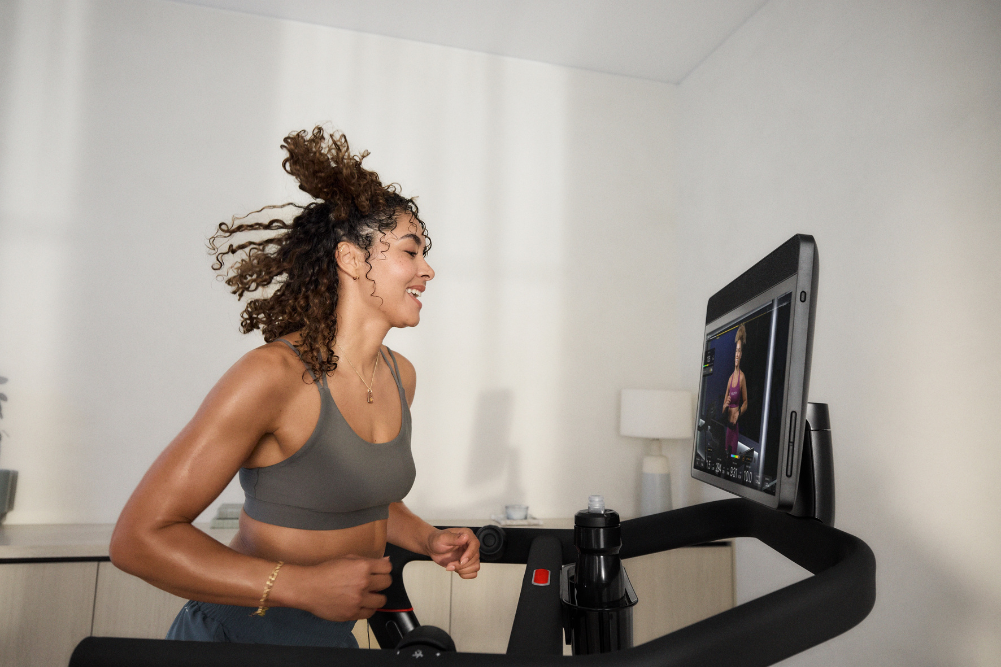
My result came in at 38.2 mL/kg/min, which was rated optimal for my age. I will admit this surprised me, because the test itself felt anything but optimal. The protocol involves progressively increasing intensity on a treadmill while wearing a mask that measures your oxygen exchange. It is uncomfortable and the mask felt suffocating at times. My maximal heart rate hit 190 bpm. I was impressed with my efforts, considering I hadn’t moved much post baby (and during pregnancy), and certainly no running!
The recommendation from my results was clear: increase aerobic training to at least twice weekly for 45 minutes. The specifics were tailored to where I was, not some idealised version of me. I was walking a lot with the baby and doing occasional yoga. The plan suggested continuing daily or alternate-day walks, adding two running sessions per week starting with 20 to 30 minutes of continuous running at a manageable pace, then gradually introducing interval-based sessions. It also flagged the importance of Zone 5 training to build the aerobic base over time.
Strength testing and the bigger picture
Alongside the VO2 max, the physical assessment covers strength and balance. This included grip strength (both sides), isometric squat and counter movement jump and single leg standing balance with eyes open and eyes closed. These tests are important; the grip strength is one of the most robust predictors of all-cause mortality in the research literature. Balance, similarly, is an early marker of neurological and musculoskeletal health.
The recommendation for strength training was to prioritise weight-bearing exercise at least twice weekly, working up to an 8 out of 10 intensity to ensure progressive overload. For bone density in particular, consistency matters. As the plan put it: it’s better to be consistently good than occasionally great.
Practical changes
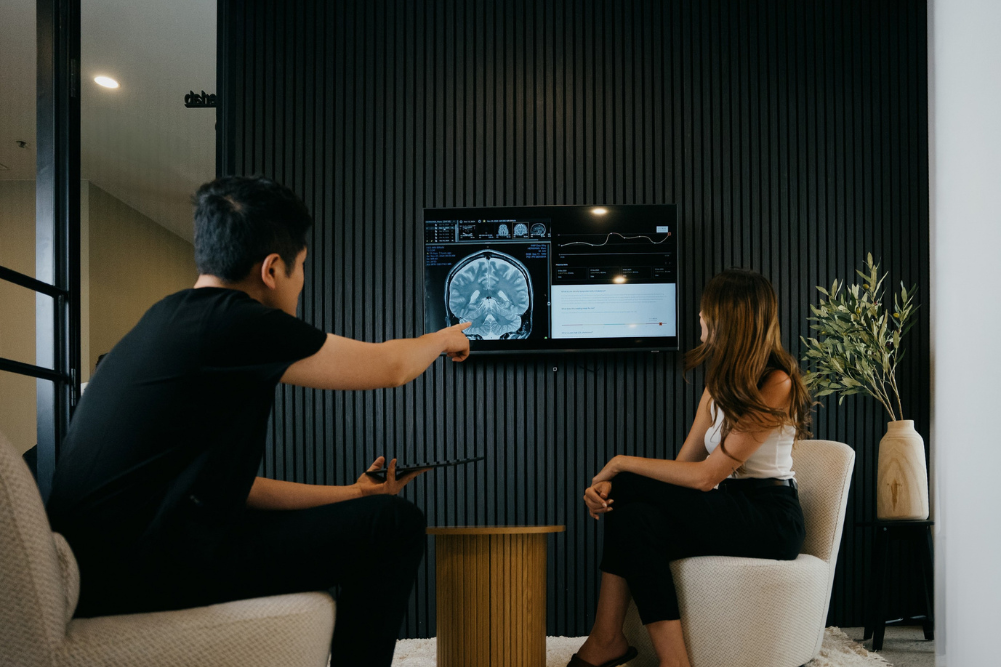
After my results were processed, I had an online consultation with Dr Eldi van Loggerenberg, the physician assigned to my care at Everlab. I loved our chat. There is something genuinely different about talking to a doctor who has already read all your data before you walk in (or, in this case, log on). The conversation started not from scratch, but from a place of real context.
Dr Eldi was warm, specific and practical. She talked me through my cholesterol panel with a clarity that helped me understand the nuances rather than just the headline number. She recommended a repeat blood test for Vitamin D. She flagged the consideration of lipid-lowering therapy as something worth exploring given my genetics and its potential long-term relevance to dementia risk. And she helped me understand what the visceral fat number actually meant for my health, rather than leaving me to spiral about it.
The practical changes I walked away with: add an iron supplement, increase protein, add more fibre, add flaxseeds, prioritise early nights and strength training. Not a radical overhaul but a targeted, evidence-based list that made sense for my specific body at this specific moment in my life with two young kids.
Where I am now
When I first tested with Everlab, I was six-months postpartum and not doing much (except for nourishing a baby, which is a lot!). Although my body was still in recovery, I was ready to start gently and intentionally moving again, but I wanted to do it in a way that made sense for my biology. Since the test, I’ve committed to lifting weights twice a week, surfing a few times a month, eating much more protein and including a high-intensity sprint every other week. My sleep has improved, mostly thanks to my baby not feeding around the clock, I’ve been having a sauna three times a week and really trying to work on stress levels.
I am taking creatine, a greens powder and a postpartum supplement. All of these, combined with the personalised results I’ve uncovered from Everlab, are aligned with my body’s actual data, not just what I thought I should be doing. This is what I’ve learnt the most from Everlab — that wellness isn’t one-size-fits-all. Cold plunges, fasting and high-volume cardio might be exactly right for some people, but for me, they’re not. Knowing what is and isn’t working for my biology specifically has shifted the way I approach every decision I make about my health.
Stay tuned
My six-month check-in and retest is coming up, and I’ll be sharing those results with you when they land. In the meantime, if any of this resonates, consider it an invitation. Not to catastrophise or create concern but to know, truly know. Because once you have the data, you can do something with it — the correct thing. That is the whole point.
This article is featured in WellBeing Magazine 223