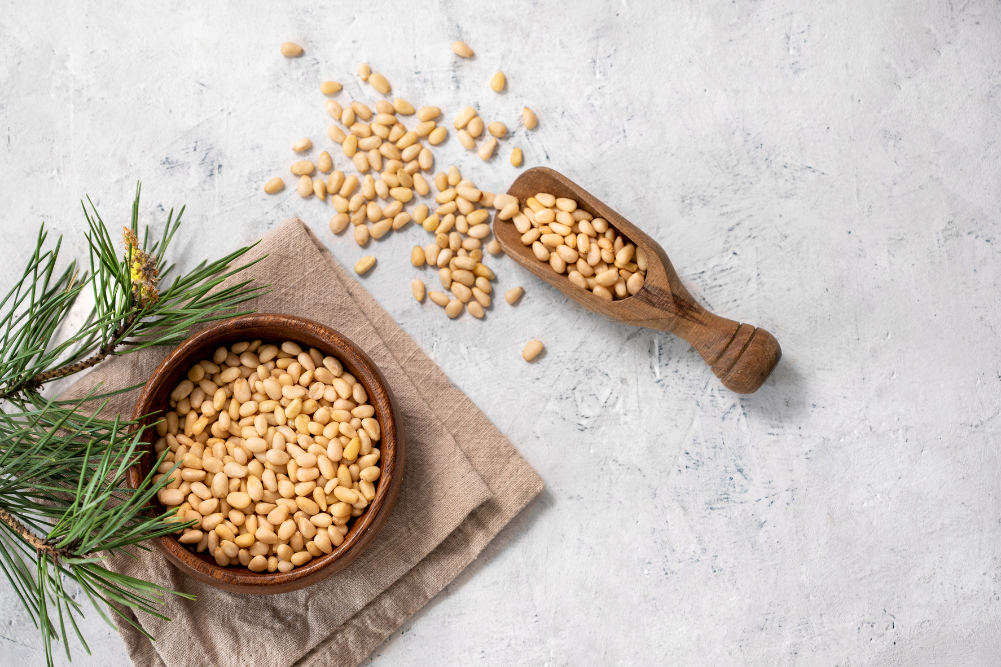
Pine Nuts
The small, buttery seeds of pine trees are not actually nuts but technically seeds found inside pinecones. They’re also one of the oldest wild foods humans have gathered. Archaeological evidence shows they were eaten nearly 10,000 years ago, prized for their high energy content and easy portability.
The Paiute and Shoshone nations indigenous to the US Southwest harvested piñon pine nuts as a vital winter food. The Romans valued them as an aphrodisiac and used them in sauces, meats and desserts. In Italy, they’ve remained a staple for centuries and are famous for starring in pesto alla Genovese. Throughout the Middle East, pine nuts have long added richness to rice dishes, stuffed vegetables, sweets like baklava, and hummus as a garnish.
In Korea and China, pine nuts feature in confections, teas and juk (rice porridge). Lightly toasting pine nuts enhances their nutty flavour, which pairs beautifully with earthy, tangy or sweet ingredients. Sprinkle them toasted over a roast pumpkin and feta salad with rocket and a honey–balsamic dressing. Add them to a beetroot, orange and goat’s cheese salad for texture and richness. Combine them with grilled zucchini ribbons, mint and lemon zest for a simple side. Stir through quinoa or brown rice with herbs, chopped dates and roasted carrots. Scatter over baked barramundi or roast chicken with a squeeze of lemon and fresh herbs. Or bake them into spinach and feta pies.
Pine nuts are rich in monounsaturated fats, protein, magnesium and vitamin E. They also contain pinolenic acid, which some research suggests may help with appetite regulation and cholesterol levels. Healthy, versatile and delicious… what’s not to love
about pine nuts!