Bioenergetic Movement: Healing Through Flow
Movement is more than exercise. It’s the language of your body, the map of your energy and often the mirror of your emotions. Belinda Norton shares a daily practice designed to release what’s stuck, physically, emotionally and energetically.
Movement is more than exercise. It’s the language of your body, the map of your energy, and often the mirror of your emotions. Every tension, every stiffness, every tight knot carries a story. That’s where bioenergetic movement comes in, a practice designed to release what’s stuck physically, emotionally and energetically, and reconnect us to our full vitality.
What is bioenergetic movement?
Bioenergetic movement is rooted in the understanding that mind and body are inseparable. Developed through insights from somatic therapy, psychology and energy medicine, it combines posture, breath and intentional motion to release chronic tension, emotional blocks and stagnant energy. Unlike traditional workouts, it doesn’t prioritise aesthetics or performance. Instead, it prioritises freedom in the body and clarity in the mind. You move to feel, not to count calories. You move to release, not to impress. And in that freedom, the body heals itself.
Why we hold energy
Stress, trauma and daily pressures are stored in the body. Perhaps it’s a tight jaw, stiff shoulders or shallow breathing. These aren’t just physical symptoms; they’re bioenergetic signals telling you where energy is stuck. By working with movement, breath and tension release, we reconnect the body’s flow. Over time, this frees up emotional and physical energy, improves posture and restores a sense of groundedness and clarity.
Modern science supports what ancient practices have always known: movement regulates the nervous system. Dynamic, mindful motion improves blood flow, lymphatic circulation and vagal tone, the very system that controls stress response, digestion and mood. Bioenergetic movement also engages the fascia, the connective tissue network that envelops muscles and organs. When fascia is stiff or restricted, energy can’t flow freely. Gentle, intentional movements help release these restrictions, unlocking a renewed sense of vitality from your core outward.
Emotional release through motion
You might be surprised at how much your body can communicate when allowed to move. A shoulder shake can release months of tension. A grounded stomp can dissolve anxiety. A deep backbend can open heart energy. This is why bioenergetic movement is more than fitness; it’s therapy, meditation and energy work rolled into one. It teaches us that healing begins in motion, and that energy, like water, must flow to stay
clean, vibrant and alive.
The benefits of a daily practice
- Reduced tension: release tight muscles in neck, shoulders and lower back
- Nervous system regulation: feel calmer, more focused and grounded
- Emotional clarity: move through stuck emotions instead of storing them
- Posture and core alignment: improved spinal health and mobility
- Energy flow: increased vitality and inner resilience
Bioenergetic movement isn’t about counting reps or achieving perfection; it’s about listening to your body, releasing stored energy and reclaiming vitality. By moving with awareness and intention, you learn to free both your body and your mind. You begin to trust your energy again. You begin to feel alive again. Because healing isn’t found in stillness alone; it’s found in flow.
A bioenergetic movement practice
Time: 15 to 20 minutes.
Equipment: none needed. Frequency: daily or three to five times per week.
- Root and ground (2 minutes) Stand tall with knees slightly bent. Inhale through the nose, exhale through the mouth. Imagine roots growing from your feet into the earth. Feel the connection.
- Shoulder and jaw release (2 minutes) Gently shrug shoulders up to ears, then roll them back and down. Open mouth slightly, exhale audibly. Repeat five to eight times.
- Spinal wave (3 minutes) Slowly roll the spine down, vertebra by vertebra, then roll back up. Let arms swing freely. Focus on sensation rather than perfection.
- Grounded stomp (2 minutes) With feet hip-width apart, lightly stomp in place. Allow the vibration to move through the body, releasing tension from hips and lower back.
- Side bends and twists (3 minutes) Reach one arm overhead, bend gently to the opposite side. Switch sides. Then twist gently from the waist, letting the arms swing.
- Shake it out (2 minutes) Shake each limb individually, then the whole body. Let any residual tension dissipate.
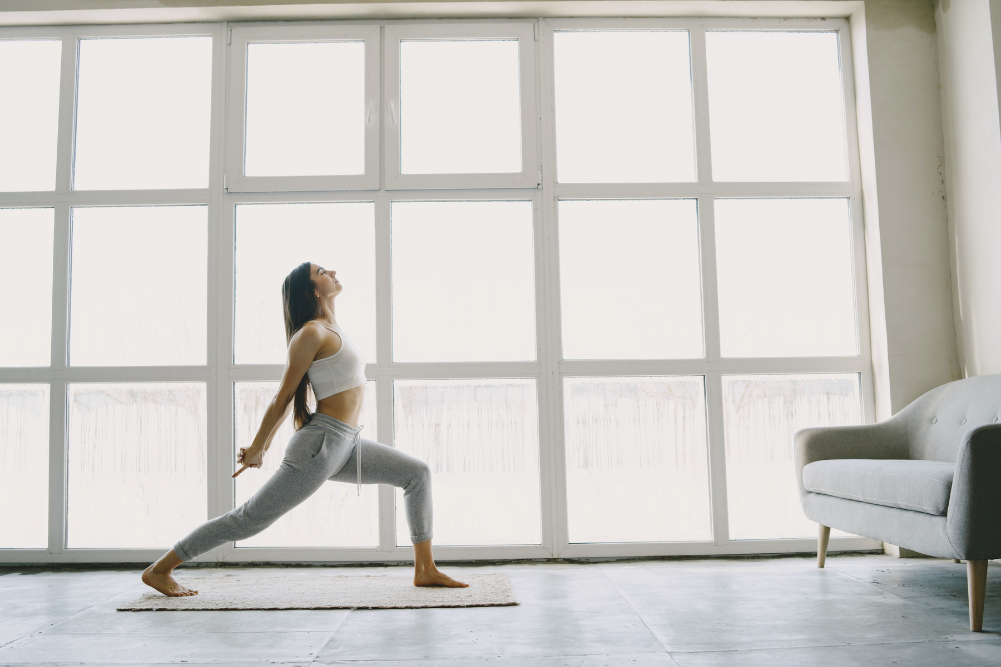
- Heart-opening stretch (2 to 3 minutes) Place hands on lower back, elbows back, chest lifted. Breathe into the front of your body. Visualise energy flowing freely from heart to hands to feet.
This article is featured in WellBeing Magazine 224